Business License

POM Plastic Properties: A Complete Guide for Engineers and Buyers
POM plastic properties include high stiffness, low friction, excellent wear resistance, and strong dimensional stability. These characteristics make it a preferred engineering plastic for precision gears, bearings, and automotive fuel-system components. The material is also known as polyoxymethylene (POM) or acetal. It is available in two main forms: homopolymer and copolymer. Each form has slightly different thermal and chemical behavior.
What surprises many procurement teams is how often POM is chosen not because it is the cheapest option, but because it performs reliably where tight tolerances and repetitive motion matter. Last year, a Jiangsu-based appliance manufacturer switched a gear train from a generic nylon grade to a Polyplastics copolymer POM. The change cut dimensional variation by 40% over 100,000 cycles and reduced audible gear noise on the production line. The cost per kilogram was slightly higher, but the total cost of quality dropped.
In this guide, we will cover the physical, mechanical, thermal, and chemical properties of POM plastic. We will compare homopolymer and copolymer grades. We will explain where POM fits in engineering applications. We will also show how to select and process the material with confidence. If you are evaluating POM for a new design or looking for a stable supply source, the sections below will help you make a more informed decision.
Key Takeaways
POM delivers high stiffness, low friction, and excellent wear resistance for precision mechanical parts.
Homopolymer POM (such as DuPont Delrin) offers slightly higher strength and hardness, while copolymer POM (such as Polyplastics DURACON) provides better chemical resistance and long-term thermal stability.
Common applications include gears, bearings, bushings, automotive fuel-system components, electrical housings, and consumer-product mechanisms.
POM requires controlled drying, melt temperature, and mold design to avoid degradation and dimensional issues.
Ailide Polymer distributes certified POM grades from globally recognized suppliers with technical data sheets and batch traceability.
What Is POM Plastic?
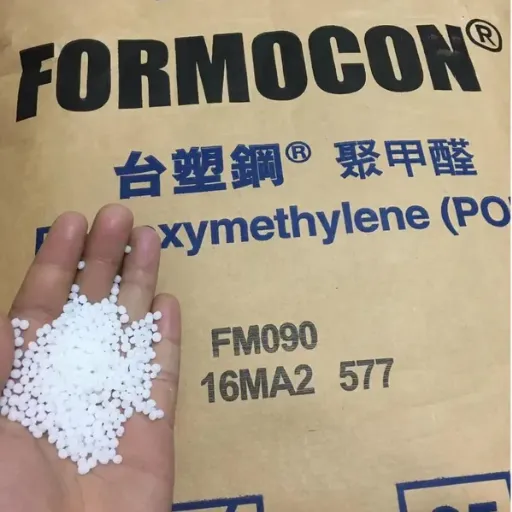
Polyoxymethylene (POM), widely called acetal, is a high-crystallinity thermoplastic. The polymer chains pack tightly together, which gives POM much higher stiffness and strength than general-purpose plastics such as polypropylene (PP) or polyethylene (PE). It sits in the engineering plastics family alongside materials like nylon (PA), polycarbonate (PC), and polybutylene terephthalate (PBT).
POM is produced commercially as either a homopolymer or a copolymer. The homopolymer has a uniform repeating structure, which leads to higher crystallinity and marginally better mechanical properties. The copolymer incorporates additional monomer units that interrupt the chain, improving thermal stability and chemical resistance. Both types are widely used, and the right choice depends on the application environment and processing method.
Because POM is highly crystalline, molded parts have a smooth surface and low moisture absorption compared with nylon. That makes POM attractive for moving parts that must maintain fit and function in humid or wet conditions. The material also machines well, which is why it is common in both injection-molded components and precision-machined parts.
If you are new to the material, our POM material selection guide explains how to match grade type to application requirements.
Mechanical Properties of POM
POM is valued for its balanced mechanical performance. It is stiff, tough, and fatigue-resistant, with a low coefficient of friction that reduces wear in sliding and rotating applications. These properties make it a direct competitor to nylon in many mechanical designs, though the two materials behave differently under moisture and heat.
| Property | Typical Range | Notes |
|---|---|---|
| Density | 1.41–1.43 g/cm³ | Slightly higher than nylon |
| Tensile strength | 60–70 MPa | Strong for an unreinforced engineering plastic |
| Flexural modulus | 2,500–2,900 MPa | High stiffness supports tight tolerances |
| Heat deflection temperature | 110–160 °C | Depends on grade and test load |
| Moisture absorption | <0.3% | Much lower than nylon |
| Coefficient of friction | <0.2 (against steel) | Lower with lubricated grades |
Tensile Strength and Stiffness
Standard unreinforced POM has a tensile strength of approximately 60–70 MPa and a flexural modulus of roughly 2,500–2,900 MPa. Those values place it well above commodity plastics and close to some filled nylon grades. For engineers, this means POM can carry mechanical loads without excessive deflection, which is important for gears, levers, and snap-fit assemblies.
Glass-filled POM grades push stiffness even higher. A typical 25% glass-fiber grade can reach a flexural modulus above 8,000 MPa. The trade-off is reduced impact resistance and a rougher surface finish. Glass-filled POM is usually selected when dimensional stability under load is more critical than appearance or impact toughness.
Wear Resistance and Low Friction
One of the most distinctive POM plastic properties is its low coefficient of friction. Unfilled POM against steel typically shows a dynamic coefficient of friction below 0.2, and this improves further with specialized lubricated grades. The material also resists abrasion and scoring under repeated contact. Those characteristics explain why POM dominates small gears, rollers, and bearing surfaces in appliances, automotive systems, and industrial equipment.
Pro Tip: For high-cycle gear trains, look for internally lubricated POM grades that contain PTFE or silicone. These reduce break-in wear and can extend service life without requiring external grease.
Impact and Fatigue Resistance
POM absorbs impact energy well for a stiff material. It does not shatter easily on sudden load. It also performs reliably under repeated cyclic loading. Fatigue resistance is a key reason POM is used in spring-like clips, ratchets, and snap-fit connectors.
However, the material is notch-sensitive. Sharp internal corners, deep grooves, or improper gate placement can act as stress concentrators. Over time, these stress points can lead to crack initiation. Design with generous radii to avoid this problem.
When Minghao, a tooling engineer at a Suzhou automotive supplier, redesigned a fuel-system clip from POM, he added a small radius at the base of the snap arm. That single change increased the part’s fatigue life by a factor of three in vibration testing. The lesson: POM performs well, but part design must respect its notch sensitivity.
Thermal and Chemical Properties of POM
Thermal behavior and chemical resistance determine whether POM will survive long-term in an engine compartment, under a sink, or inside a fuel system. Compared with engineering plastics like PC or ABS, POM has a narrower processing window, but it offers good performance in the moderate temperature range where many mechanical parts operate.
Heat Deflection and Continuous Service Temperature
Standard POM has a heat deflection temperature of approximately 110–160 °C at 1.8 MPa, depending on grade and test conditions. Continuous service temperature is typically rated between 85 °C and 105 °C for long-term use. Homopolymer grades generally tolerate slightly higher peak temperatures, while copolymer grades offer better resistance to prolonged thermal aging.
For applications near engines, exhaust systems, or high-temperature electronics, POM may not be the best choice. In those cases, materials such as PA66, PBT, or PPS are often considered. POM is better suited for warm, mechanically loaded environments where the temperature stays below its continuous service limit.
Chemical Resistance and Hydrolysis Behavior
POM resists many organic solvents, oils, fuels, and greases. It performs well in contact with gasoline, diesel, and common hydraulic fluids, which is why it is widely used in automotive fuel-system components. It also resists many detergents and household chemicals.
The material’s weakness is strong acids and strong bases. Prolonged exposure to acidic or alkaline environments can cause chain degradation and surface cracking. Copolymer POM generally shows better resistance to alkaline solutions than homopolymer POM. If your application involves chemical cleaning agents or coolant exposure, test the specific grade under real conditions and request a technical data sheet from your supplier.
Moisture Absorption and Dimensional Stability
POM absorbs far less moisture than nylon. Typical equilibrium moisture absorption is below 0.3%, while unreinforced nylon can absorb several percent. That difference makes POM the better choice for precision parts that must hold tight dimensions in humid climates or wet environments. Gears, cams, and pump housings maintain their fit and function without the swelling and softening that nylon can show.
This low moisture absorption is also why POM vs nylon comparisons often favor POM when dimensional stability is critical.
Electrical and Optical Properties of POM
POM is not typically chosen for its electrical properties. Even so, it performs adequately in many low-voltage applications. It has good electrical insulation characteristics. Its dielectric behavior remains stable across a range of frequencies. It also resists tracking. That makes it suitable for housings, connectors, and switches where mechanical strength matters more than dielectric performance.
The material is opaque in standard grades. Transparent or translucent variants exist, but they are specialty products. They are not common in mechanical applications. For optical clarity, polycarbonate (PC) or polymethyl methacrylate (PMMA) are more appropriate.
POM Grades and How They Modify Properties
Base POM is excellent, but many applications require a modified grade. Additives and reinforcements adjust POM plastic properties to match specific performance targets. Understanding the main grade families helps engineers and buyers choose the right material without over-specifying.
Standard Unfilled Grades
Standard POM grades are the starting point for most applications. They offer the best balance of stiffness, toughness, surface finish, and processability. Typical examples include DuPont Delrin 100 and 500 series and Polyplastics DURACON M90 and M25. These grades are used for gears, rollers, zippers, appliance components, and automotive clips.
Glass-Fiber Reinforced Grades
Glass fiber increases stiffness, strength, and dimensional stability. It reduces creep and improves performance under sustained load. The downside is reduced toughness and increased wear on molds and mating metal parts. Glass-filled POM is common in structural brackets, pump housings, and under-hood components where rigidity matters more than impact resistance.
Impact-Modified and Elastomer-Blended Grades
Adding impact modifiers or elastomer components improves toughness and ductility. These grades are used when parts must survive drop tests, assembly abuse, or repeated snap-fit operations. They sacrifice some stiffness and surface hardness, but they reduce brittle failure in cold or high-impact conditions.
UV-Stabilized and Weather-Resistant Grades
Standard POM degrades under prolonged ultraviolet exposure, becoming chalky and brittle. UV-stabilized grades are necessary for outdoor applications such as irrigation components, exterior automotive trim, and outdoor power equipment. Always confirm that the UV stabilization package is suitable for the intended climate and exposure duration.
Internally Lubricated Grades
PTFE, silicone, or molybdenum disulfide additives create self-lubricating surfaces. These grades reduce friction and wear in high-cycle sliding or rotating assemblies. They are often specified for gears, bushings, and conveyor components where external lubrication is difficult or undesirable.
Food-Contact and Medical Grades
Certain POM grades are formulated to meet food-contact or medical-device regulations. These grades use controlled additive packages and tighter manufacturing controls. If your application requires FDA, EU, or medical compliance, request the relevant certifications and migration test data before specifying the material.
You can browse our full range of POM materials and request technical data sheets for any grade.
POM Applications Across Industries
POM plastic properties translate into practical advantages across automotive, electronics, appliances, industrial machinery, and consumer products. The material is especially common in parts that move, slide, or transmit force repeatedly.
Automotive Components
In vehicles, POM appears in fuel-system components, seatbelt mechanisms, door-lock systems, and HVAC controls. Its resistance to fuels and oils, combined with low friction and fatigue resistance, makes it ideal for fuel sender units, pump housings, and clips. Automotive manufacturers often require grades with specific OEM approvals, batch traceability, and documented material certifications.
Electrical and Electronics
POM is used in switches, key caps, connectors, and housings for small appliances. It provides a good balance of electrical insulation, mechanical strength, and surface finish. For flame-retardant applications, special grades are available, though other materials may be more cost-effective when fire ratings are the primary driver.
Appliances and Consumer Goods
Washing machines, coffee makers, vacuum cleaners, and power tools all contain POM gears, cams, levers, and sliders. The material’s smooth surface and low friction help reduce noise and energy loss in moving assemblies. Consumer-product designers also appreciate POM’s ability to take sharp detail and maintain color consistency across batches.
Industrial Machinery
Conveyor rollers, bearings, bushings, and pump impellers benefit from POM’s wear resistance and dimensional stability. In industrial settings, the material often replaces metal in low-load bearing applications to reduce weight, noise, and lubrication requirements. For heavy-load or high-temperature machinery, metal or high-performance plastics may still be necessary.
POM Injection Molding and Processing Guidelines
POM is relatively easy to process, but it is sensitive to overheating and acidic release agents. Proper drying, melt temperature, and mold design are essential to avoid degradation, discoloration, and dimensional instability.
Drying Requirements
POM is hygroscopic enough to require drying before processing. Typical drying conditions are 80–100 °C for 2–4 hours, depending on pellet size and initial moisture content. Inadequate drying can cause surface defects, reduced mechanical properties, and hydrolysis-related degradation during molding.
Melt and Mold Temperature
Recommended melt temperature for POM is usually 190–230 °C. Homopolymer grades tend to process at the upper end of the range, while copolymer grades are slightly lower. Mold temperatures typically range from 60–120 °C. Higher mold temperatures improve surface gloss and crystallinity but increase cycle time.
POM degrades at temperatures above 240 °C, releasing formaldehyde. Molders should avoid long residence times, hot spots, and excessive regrind. Using a properly sized barrel and minimizing holdup time protect both part quality and operator safety.
Mold Design and Gating
POM crystallizes quickly, so parts can be ejected soon after molding. However, the material shrinks anisotropically, meaning shrinkage differs along the flow direction versus across the flow direction. This must be accounted for in mold design and part tolerance analysis.
Gates should be sized to avoid excessive shear heating. Hot runners are common in high-volume production but require careful temperature control. Cold slug wells and proper venting help prevent burns and short shots. For tight-tolerance parts, a well-designed mold with balanced runner systems is more important than with many amorphous plastics.
When Lina, a procurement manager at a Ningbo mold shop, started receiving complaints about warped POM gears, the root cause was traced to inconsistent mold temperature control. After installing a regulated mold-temperature unit and adjusting gate geometry, first-pass yield improved from 82% to 96%. The fix was not the material itself, but how the material was being processed.
For detailed processing support, contact our technical support team.
POM vs Acetal: Is There a Difference?
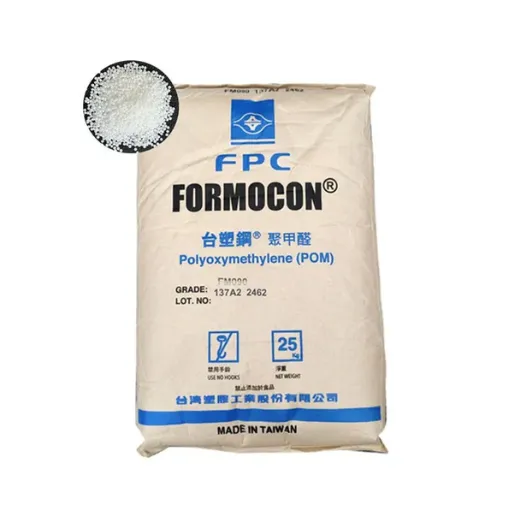
The terms POM, acetal, polyoxymethylene, and acetal resin all refer to the same polymer family. In engineering plastics procurement, "POM" and "acetal" are used interchangeably. The real distinction is between homopolymer and copolymer grades.
| Feature | Homopolymer POM | Copolymer POM |
|---|---|---|
| Common examples | DuPont Delrin | Polyplastics DURACON |
| Tensile strength | Slightly higher | Slightly lower |
| Stiffness and hardness | Higher | Moderate |
| Melting point | Higher (~175 °C) | Lower (~165 °C) |
| Fatigue resistance | Excellent | Very good |
| Chemical resistance to bases | Moderate | Better |
| Long-term thermal stability | Good | Better |
| Processing window | Narrower | Wider |
Homopolymer POM, commonly associated with DuPont Delrin, has slightly higher tensile strength, stiffness, and hardness. It also has a higher melting point and better fatigue resistance. Copolymer POM, such as Polyplastics DURACON, offers better chemical resistance, especially to bases, and improved long-term thermal stability. Copolymers are often chosen when processing consistency and chemical exposure are the main concerns.
For most applications, either type can work. The choice should be based on the specific loading, environment, and supplier specifications rather than the name on the data sheet. Always compare properties for the exact grade you plan to use.
Selecting the Right POM Grade for Your Application
Choosing a POM grade requires more than reading a generic property table. Engineers and buyers should match the material to the part’s operating conditions, manufacturing process, and quality requirements. A clear specification reduces risk and avoids costly redesigns.
Start by defining the load, temperature, chemical exposure, and wear conditions. Then determine whether stiffness, toughness, lubrication, or UV resistance is the priority. If you are replacing an existing material, identify the failure mode: is the part wearing, creeping, cracking, or swelling? The answer points to the right POM modification.
Next, consider supply chain requirements. Grades from major producers such as DuPont and Polyplastics are widely available, but not all distributors offer authorized sourcing with full documentation. A reliable supply partner should provide certificates of analysis, technical data sheets, and batch traceability for every lot.
Ready to compare grades? Request a quote for certified POM materials from globally recognized suppliers. Our technical team can recommend the right grade based on your application requirements.
Frequently Asked Questions About POM Plastic Properties
What are the main properties of POM plastic?
POM plastic offers high stiffness, low friction, excellent wear resistance, strong dimensional stability, and low moisture absorption. It also resists many organic solvents and fuels, making it suitable for precision mechanical and automotive parts.
Is POM the same as acetal?
Yes. POM, polyoxymethylene, and acetal refer to the same polymer family. The main distinction is between homopolymer and copolymer grades, which differ slightly in strength, thermal stability, and chemical resistance.
What is POM used for?
POM is commonly used for gears, bearings, bushings, automotive fuel-system components, electrical housings, appliance mechanisms, and industrial rollers. It replaces metal in many low-load, wear-resistant applications.
What is the difference between POM homopolymer and copolymer?
Homopolymer POM has slightly higher strength, stiffness, and hardness. Copolymer POM offers better resistance to alkalis and prolonged heat exposure, and it often processes more consistently. Both are widely used in engineering applications.
Can POM be used outdoors?
Standard POM is not suitable for prolonged outdoor exposure because UV radiation degrades the surface. UV-stabilized POM grades are available for outdoor applications such as irrigation systems and exterior equipment.
What temperature can POM handle?
Standard POM continuous service temperatures are typically 85–105 °C, with short-term heat deflection temperatures up to 160 °C depending on grade and test conditions. For higher temperatures, consider PA66, PBT, or PPS.
Conclusion
POM plastic properties make it one of the most reliable engineering plastics for precision mechanical parts. Its combination of stiffness, low friction, wear resistance, and dimensional stability explains why POM is found in gears, bearings, automotive fuel systems, and consumer-product mechanisms around the world. The key to success is choosing the right grade, homopolymer or copolymer, standard or reinforced, lubricated or UV-stabilized, and processing it with proper temperature and mold control.
For buyers and engineers, the deeper value comes from working with a supply partner who can provide authentic materials with full documentation and application guidance. At Ailide Polymer, we distribute certified POM grades from globally recognized suppliers such as DuPont and Polyplastics, supported by technical data sheets and batch traceability.
If you are evaluating POM for a new project or want to compare grades for an existing application, request a quote and speak with our technical team. We can help you select the right material, confirm specifications, and keep your production supply on schedule.
Recently Posted
-
ABS in Automotive Interiors: From Dashboards to Door Panels
September 2, 2026A tier-two supplier once substituted a general-purpose ABS for an automotive-grade ABS on a door trim component to save 4% on resi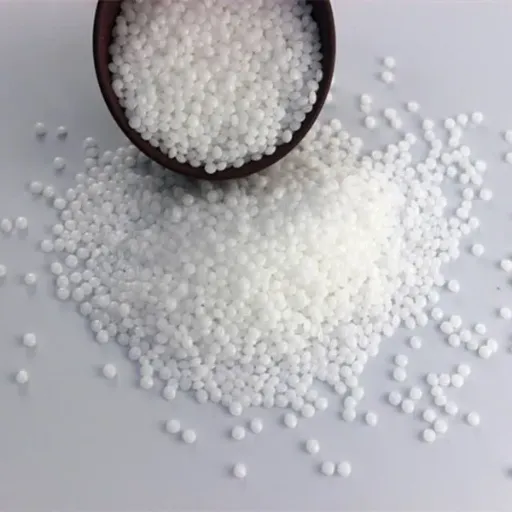 Read More
 -
ABS Flame Retardant Grades and UL 94 Ratings Explained: A Practical Guide for Buyers and Designers
September 2, 2026An electronics manufacturer once submitted a power-supply housing molded from standard ABS to a safety certification test. The mat Read More
 -
KOCETAL K300 vs Formosa FM090 vs DURACON M90: Picking the Right Medium-Viscosity POM
September 2, 2026A gear shop in India once ordered a container of acetal copolymer based on a 5% price discount, without checking whether the grade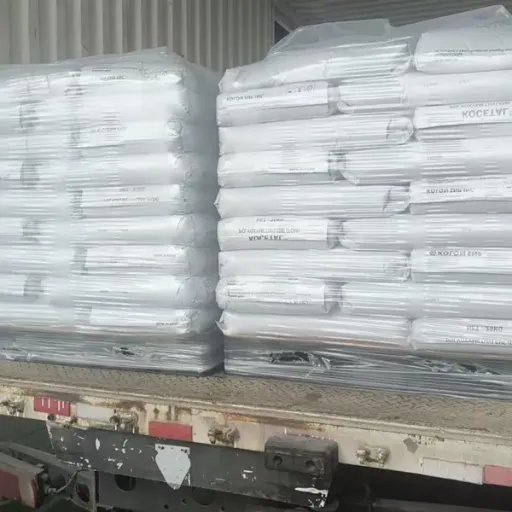 Read More
 -
PP vs PE: Which Polyolefin Resin Fits Your Application?
September 2, 2026A bottle manufacturer once chose HDPE for a hot-fill juice container and watched the bottles distort on the filling line. The mate Read More

Contact Us
Recommended Products
-
 Automotive Interior Clip and Door Lock POM K300 Injection Molding Material With Low FrictionNegotiableMOQ: 1 Kilogram
 -
KOCETAL POM K300 Virgin Pellets For Precision Gear Bearing Automotive Latch Water Valve PartsNegotiableMOQ: 1 Kilogram
-
Original Kolon POM K300 Engineering Plastic Wear Resistant Self Lubricating Acetal GranulesNegotiableMOQ: 1 Kilogram
-
Self-Lubricating POM K300 HDT 120°C Wear Resistant Resin With 0.2% Moisture AbsorptionNegotiableMOQ: 1 Kilogram
-
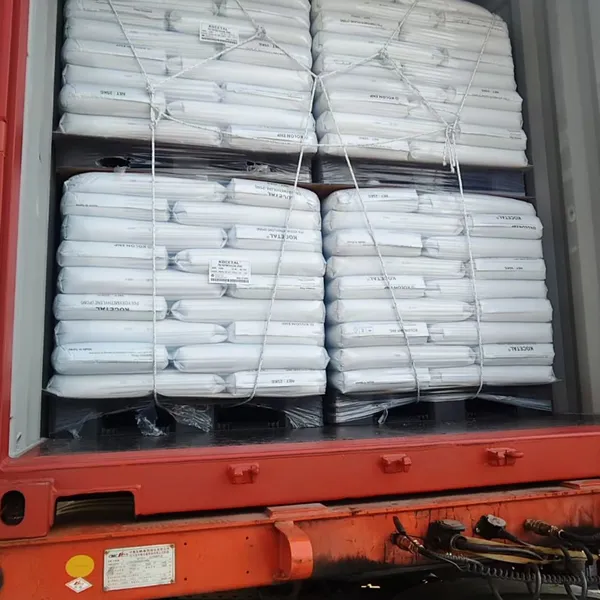
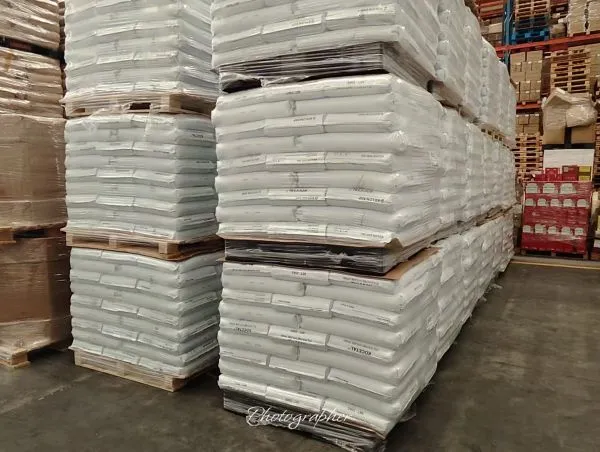
POM FM090AW PTFE Filled Wear Resistant Low Friction Acetal for Silent GearsNegotiableMOQ: 1 Kilogram
-
POM FM090 General Purpose Acetal Copolymer With Excellent MachinabilityNegotiableMOQ: 1 Kilogram
-
POM FM090 Standard Flow Acetal Copolymer Granules for Precision Injection MoldingNegotiableMOQ: 1 Kilogram
-
POM FM090 UV Stabilized Acetal Resin for Outdoor Automotive ComponentsNegotiableMOQ: 1 Kilogram
-
Technical Support Available POM K300 Acetal Copolymer for Precision Injection Molding ServiceNegotiableMOQ: 1 Kilogram
-
KOCETAL POM K300 Acetal Copolymer MFR 9 G/10min 1.41g/cm³ Tensile Strength 60MPaNegotiableMOQ: 1 Kilogram
-
Factory Price Polyacetal POM Resin FM090 for Engineering ApplicationsNegotiableMOQ: 1 Kilogram
-
High Strength Cheap POM FM090 UV Engineering Plastic for Automotive PartsNegotiableMOQ: 1 Kilogram
-
Virgin POM FM090 Granules Pellets Engineering Plastic Raw MaterialNegotiableMOQ: 1 Kilogram
-
POM K300 Plastic Granules 1.5% Shrinkage Rate 80 Shore D Hardness Stable Injection Molding PerformanceNegotiableMOQ: 1 Kilogram
-
Low Friction Coefficient High Dimensional Stability POM K300 Acetal Copolymer Injection Molding GradeNegotiableMOQ: 1 Kilogram

-
POM K300 Acetal Sheet Used for Automotive Gear Components and Conveyor Chains in Industrial MachineryNegotiableMOQ: 1 Kilogram
-
POM K300 Engineering Plastic Sheet With Melting Point 165°C and Excellent Wear Resistance for MachiningNegotiableMOQ: 1 Kilogram
-
POM K300 Acetal Copolymer Injection Molding Grade With Low Friction Coefficient and High Dimensional StabilityNegotiableMOQ: 1 Kilogram
-
POM K300 Polyoxymethylene Resin MFI 9 Engineering Plastic Granule for Injection MoldingNegotiableMOQ: 1 Kilogram
-
Virgin POM Granules Polyoxymethylene Pellets Manufacturer Direct Price for Injection MoldingNegotiableMOQ: 1 Kilogram