Business License

POM Grades: How to Choose the Right Acetal Resin in 2026
The main POM grades differ by polymer type, manufacturer, filler, and certification. Homopolymer grades such as DuPont Delrin offer higher stiffness and fatigue resistance. Copolymer grades from Polyplastics, KOCETAL, and others provide broader chemical resistance and lower porosity. The right choice depends on load, temperature, chemical exposure, and regulatory requirements.
Wang Lin, a sourcing engineer at a Hangzhou automotive supplier, faced this decision last spring. Her team needed a POM grade for a fuel-system clip that would see ethanol-blended gasoline and temperatures up to 100 degrees Celsius.
A standard homopolymer passed mechanical tests but showed stress cracking after chemical immersion. Switching to a copolymer grade solved the problem and kept the project on schedule. The difference was not price or color. It was matching the grade to the environment.
This guide explains how POM grades are classified, what the major producers offer, and how to select a grade that fits your application.
Key Takeaways
POM grades fall into two main types: homopolymer and copolymer. Homopolymers offer higher mechanical strength; copolymers offer better chemical resistance.
Leading producers include DuPont (Delrin), Polyplastics (Duracon), KOCETAL, Mitsubishi Engineering-Plastics, and BASF (Ultraform).
Common modifications include glass fiber reinforcement, PTFE fillers, UV stabilizers, and food-contact or medical certifications.
Always request the technical data sheet and certificate of analysis before qualifying a grade.
Ailide Polymer supplies certified POM grades from authorized global producers with batch documentation.
How POM Grades Are Classified
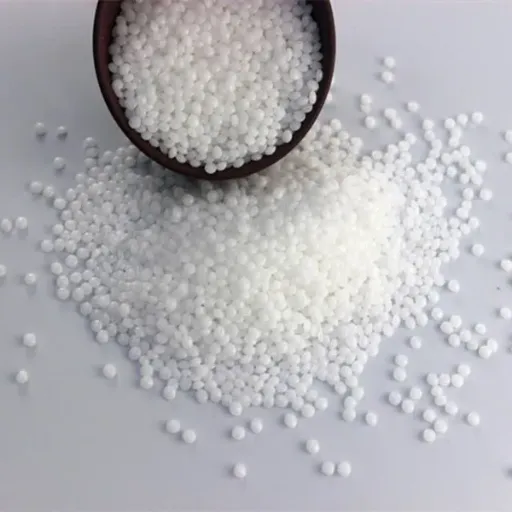
POM grades are usually grouped by polymer chemistry, manufacturer, filler or additive package, and certification level. Understanding these categories makes selection faster and reduces the risk of ordering the wrong material.
Homopolymer vs Copolymer
The first decision is polymer type. Homopolymer POM has a simpler, more regular molecular chain. Copolymer POM incorporates small amounts of comonomer to interrupt the chain. Both types are widely available as POM grades from authorized distributors.
POM homopolymer: Higher tensile strength, stiffness, hardness, and fatigue resistance. Common trade name is Delrin from DuPont.
POM copolymer: Better chemical resistance, particularly to bases and hot water. Lower centerline porosity in thick sections. Common producers include Polyplastics, KOCETAL, Mitsubishi, and BASF.
For high-load mechanical parts such as gears and springs, homopolymer often performs better. For parts exposed to fuels, cleaning agents, or moisture, copolymer is usually safer.
Filled and Modified Grades
Producers modify POM to tune mechanical, thermal, or surface properties.
Unfilled POM: General-purpose grades with balanced properties for gears, bearings, and housings.
Glass-filled POM: Higher stiffness, lower creep, and better dimensional stability. Used for structural parts.
PTFE-filled POM: Lower friction and improved wear resistance for sliding surfaces.
UV-stabilized POM: Better outdoor and light-exposure stability.
Impact-modified POM: Tougher grades for parts that see shock or drop loads.
Certification Grades
Some applications require specific regulatory compliance.
Food-contact grades: Compliant with FDA, EU, or regional food-contact regulations.
Medical grades: Biocompatibility and sterilization data for healthcare devices.
Automotive grades: Often supplied with full material certifications and lot traceability.
Flame-retardant grades: Less common for POM but available for specialized electrical applications.
Need help narrowing down a POM grade? Contact our technical team for material recommendations based on your application.
Major POM Grade Families by Manufacturer
Each producer has its own naming system and grade portfolio. Knowing the main families helps buyers compare options quickly.
DuPont Delrin
DuPont is the original producer of POM homopolymer under the Delrin brand. Delrin grades are widely used in automotive, industrial, and consumer applications. Plastics Technology regularly covers Delrin processing trends and new grade launches for these markets.
| Grade Series | Characteristics | Typical Applications |
|---|---|---|
| Delrin 100 | High viscosity, toughness | Extrusion and thick-walled parts |
| Delrin 500 | Medium viscosity, balanced | Gears, bearings, fasteners |
| Delrin 900 | Low viscosity, fast cycling | Thin-wall injection molding |
| Delrin FG | Food-contact compliant | Food processing equipment |
| Delrin SC | Specialty grades | Medical and healthcare |
| Delrin AF | PTFE-filled | Low-friction bushings and slides |
Delrin grades are often preferred when mechanical performance is the top priority.
Polyplastics Duracon
Polyplastics is one of the largest producers of POM copolymer. Its Duracon grades cover a broad range of viscosities and properties.
| Grade Series | Characteristics | Typical Applications |
|---|---|---|
| M25 | Standard viscosity | General mechanical parts |
| M90 | Medium viscosity | Gears, rollers, automotive |
| M140 | High flow | Thin-wall and complex parts |
| M270 | Low viscosity, fast cycle | High-speed molding |
| GH | Glass-filled | Structural and high-stiffness parts |
| SW | Low friction / wear | Sliding components |
| WR | Water-resistant | Plumbing and fluid handling |
Polyplastics also offers high-durability grades for fuel systems and specialized automotive applications.
KOCETAL
KOCETAL produces both standard and engineering-grade POM copolymers. The brand is known for competitive pricing and consistent processing behavior.
| Grade Series | Characteristics | Typical Applications |
|---|---|---|
| K300 | Standard viscosity | General industrial parts |
| K500 | Medium viscosity | Gears, bearings, automotive |
| K700 | Low viscosity, fast flow | Thin-wall and multi-cavity molds |
| GF | Glass-filled | Structural components |
| TF | PTFE-filled | Wear and friction reduction |
KOCETAL grades are commonly used as cost-effective alternatives in appliances, electronics, and industrial machinery.
Mitsubishi Engineering-Plastics Iupital
Mitsubishi Engineering-Plastics offers Iupital POM copolymer grades with strong reputations in Asia.
| Grade Series | Characteristics | Typical Applications |
|---|---|---|
| F20 | Standard viscosity | General purpose |
| F30 | Medium viscosity | Automotive and industrial |
| F40 | Low viscosity | High-speed molding |
| FG | Food-contact | Kitchen and food equipment |
| CF | Carbon-filled | Conductive and anti-static parts |
BASF Ultraform
BASF produces Ultraform POM copolymer, often used in European and global automotive supply chains.
| Grade Series | Characteristics | Typical Applications |
|---|---|---|
| H2320 | Standard viscosity | General mechanical |
| N2320 | Improved toughness | Impact-prone parts |
| S2320 | High flow | Thin-wall components |
| W2320 | Weathering resistant | Outdoor and lighting |
| Glass-filled | Reinforced | Structural parts |
Each manufacturer publishes detailed technical data sheets. UL Prospector hosts independent material databases that engineers use to compare tensile strength, flexural modulus, melt flow rate, and heat deflection temperature across POM grades.
Selecting POM Grades by Application
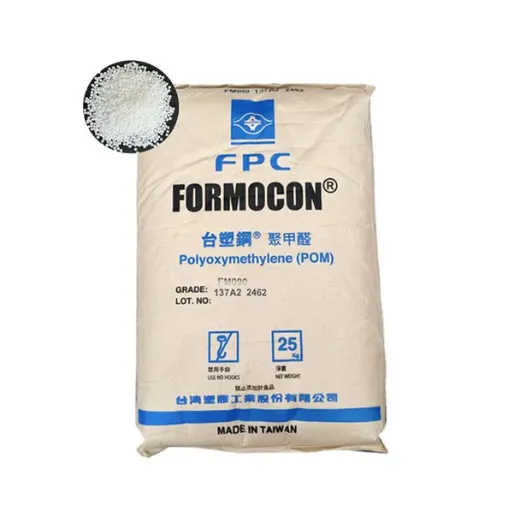
The best grade depends on what the part must do and the environment it will face.
Gears and Sprockets
For precision gears, look for medium-viscosity unfilled grades with good wear resistance and dimensional stability. Delrin 500, Polyplastics M90, and KOCETAL K500 are common choices. For high-load metal replacement, consider glass-filled grades.
Bearings and Bushings
Low friction is the key requirement. Unfilled copolymer grades work well in many cases. PTFE-filled grades further reduce friction for sliding surfaces that run dry.
Fuel System Components
Fuel caps, pump housings, and injector parts need chemical resistance to gasoline, diesel, and ethanol blends. Copolymer grades with fuel resistance are preferred. Plastics News reports that automotive fuel-system material specifications continue to tighten as emissions regulations evolve. Always verify long-term immersion data before finalizing a grade for fuel contact.
Medical Devices
Insulin pens, inhalers, and surgical instruments require medical-grade POM with biocompatibility and sterilization data. Delrin SC and similar medical grades are designed for these applications.
Food Contact
Food-contact grades such as Delrin FG, Polyplastics FG, and Mitsubishi FG comply with regulations for kitchen equipment and dispensers. Confirm the specific regional compliance before production.
Springs, Clips, and Fasteners
Fatigue resistance and flexural recovery matter here. Homopolymer grades often perform well because of their higher stiffness and fatigue life.
Outdoor and Lighting
UV-stabilized grades are needed for long-term outdoor exposure or lighted environments. Standard POM will degrade and discolor under UV light.
Zhang Wei, a product engineer at a Shenzhen electronics factory, chose a standard POM copolymer for a printer gear train. The part worked well for six months, then began to yellow and become brittle near a window.
He replaced it with a UV-stabilized grade and the issue stopped. The cost increase was small compared to the warranty claims it prevented.
Key Properties to Compare on the Technical Data Sheet
The technical data sheet is the most important document for grade selection. Focus on the properties that affect your part.
Mechanical Properties
Tensile strength: Resistance to pulling forces.
Flexural modulus: Stiffness under bending.
Impact strength: Resistance to sudden shock.
Elongation at break: Ductility before fracture.
Thermal Properties
Heat deflection temperature: Stiffness at elevated temperatures.
Melting point: Processing window and high-temperature limit.
Coefficient of thermal expansion: Dimensional change with temperature.
Rheological Properties
Melt flow rate: How easily the material flows during injection molding. Lower viscosity grades fill thin walls and complex molds more easily.
Mold shrinkage: Critical for dimensional control and tooling design.
Other Properties
Water absorption: Affects dimensional stability in humid environments.
Chemical resistance: Check compatibility with fuels, solvents, cleaners, and bodily fluids.
Flammability rating: Important for electrical and transportation applications.
For a deeper look at how POM compares to other materials, see our article on POM applications.
POM Grade Selection Checklist
Use this checklist when evaluating POM grades for a new part or production program.
Define the application: What does the part do, and what loads does it see?
Identify environmental exposure: Chemicals, moisture, temperature, UV, and outdoor conditions.
Choose polymer type: Homopolymer for mechanical performance, copolymer for chemical resistance.
Select filler or modification: Unfilled for general use, glass-filled for stiffness, PTFE-filled for low friction, UV-stabilized for outdoor.
Check certifications: Food contact, medical, automotive, or flame retardancy as needed.
Request the TDS: Compare key properties against your requirements.
Run a trial batch: Validate processing behavior and part performance before scaling.
Chen Wei, a procurement manager at a Guangzhou appliance manufacturer, now sends this checklist to every supplier. He says it saves two to three weeks of back-and-forth.
It also prevents mismatched grades from reaching the production floor.
Sourcing Certified POM Grades
Not all POM on the market meets original manufacturer specifications. Gray-market resin, regrind, and degraded material can cause molding defects, off-spec parts, and field failures.
Buy Through Authorized Channels
Authorized distributors receive material directly from producers and can provide full documentation. Ailide Polymer sources POM from DuPont, Polyplastics, KOCETAL, and other recognized suppliers, with certificates of analysis for every batch.
Verify Documentation
Before approving a grade, request:
Technical data sheet (TDS)
Certificate of analysis (COA)
Material safety data sheet (SDS)
Origin or regulatory documentation where required
Trial Before Scale
Start with a small batch to confirm molding behavior and end-use performance. Once the grade is qualified, lock in supply terms to protect against allocation and price swings.
Ready to source certified POM grades? Request a quote from Ailide Polymer for Delrin, Polyplastics, KOCETAL, and other acetal resins.
Frequently Asked Questions
What are the main types of POM grades?
The two main types are POM homopolymer and POM copolymer. Homopolymers offer higher stiffness and fatigue resistance. Copolymers offer better chemical resistance, lower porosity, and improved thermal stability.
Is Delrin the same as POM?
Delrin is DuPont's brand name for POM homopolymer. It is one type of POM, not the only type.
What is the difference between POM 100 and POM 500?
Delrin 100 is a higher-viscosity, tougher grade often used for extrusion and thick parts. Delrin 500 is a medium-viscosity grade with balanced properties for injection-molded gears, bearings, and fasteners.
Which POM grade is best for gears?
Medium-viscosity unfilled grades such as Delrin 500, Polyplastics M90, and KOCETAL K500 are commonly used for gears. For higher loads, glass-filled grades may be better.
Can POM grades be used for food contact?
Yes. Food-contact grades such as Delrin FG, Polyplastics FG, and Mitsubishi FG are available. Always confirm compliance with the relevant regional regulations.
How do I know if a POM grade is authentic?
Request documentation from the supplier, including the technical data sheet and certificate of analysis. Buy through authorized distributors to reduce the risk of counterfeit or degraded material.
Conclusion
POM grades are not interchangeable. The right grade depends on polymer type, manufacturer, filler, certification, and the specific demands of the application. Homopolymer grades such as DuPont Delrin excel in mechanical performance. Copolymer grades from Polyplastics, KOCETAL, Mitsubishi, and BASF offer broader chemical resistance and processing flexibility.
For buyers and engineers, the selection process starts with the technical data sheet and ends with a qualified trial batch. Working with an authorized distributor ensures that the material you receive matches the grade you specified.
If you are evaluating POM for a new project, the next step is to request the technical data sheet and run a trial batch. Ailide Polymer supplies certified POM grades from globally recognized producers, with technical support to help you choose the right resin for your application.
Recently Posted
-
ABS in Automotive Interiors: From Dashboards to Door Panels
September 2, 2026A tier-two supplier once substituted a general-purpose ABS for an automotive-grade ABS on a door trim component to save 4% on resi Read More
 -
ABS Flame Retardant Grades and UL 94 Ratings Explained: A Practical Guide for Buyers and Designers
September 2, 2026An electronics manufacturer once submitted a power-supply housing molded from standard ABS to a safety certification test. The mat Read More
 -
KOCETAL K300 vs Formosa FM090 vs DURACON M90: Picking the Right Medium-Viscosity POM
September 2, 2026A gear shop in India once ordered a container of acetal copolymer based on a 5% price discount, without checking whether the grade Read More
 -
PP vs PE: Which Polyolefin Resin Fits Your Application?
September 2, 2026A bottle manufacturer once chose HDPE for a hot-fill juice container and watched the bottles distort on the filling line. The mate Read More

Contact Us
Recommended Products
-
 Automotive Interior Clip and Door Lock POM K300 Injection Molding Material With Low FrictionNegotiableMOQ: 1 Kilogram
 -
KOCETAL POM K300 Virgin Pellets For Precision Gear Bearing Automotive Latch Water Valve PartsNegotiableMOQ: 1 Kilogram
-
Original Kolon POM K300 Engineering Plastic Wear Resistant Self Lubricating Acetal GranulesNegotiableMOQ: 1 Kilogram
-
Self-Lubricating POM K300 HDT 120°C Wear Resistant Resin With 0.2% Moisture AbsorptionNegotiableMOQ: 1 Kilogram
-
POM FM090AW PTFE Filled Wear Resistant Low Friction Acetal for Silent GearsNegotiableMOQ: 1 Kilogram
-
POM FM090 General Purpose Acetal Copolymer With Excellent MachinabilityNegotiableMOQ: 1 Kilogram
-
POM FM090 Standard Flow Acetal Copolymer Granules for Precision Injection MoldingNegotiableMOQ: 1 Kilogram
-
POM FM090 UV Stabilized Acetal Resin for Outdoor Automotive ComponentsNegotiableMOQ: 1 Kilogram
-
Technical Support Available POM K300 Acetal Copolymer for Precision Injection Molding ServiceNegotiableMOQ: 1 Kilogram
-
KOCETAL POM K300 Acetal Copolymer MFR 9 G/10min 1.41g/cm³ Tensile Strength 60MPaNegotiableMOQ: 1 Kilogram
-
Factory Price Polyacetal POM Resin FM090 for Engineering ApplicationsNegotiableMOQ: 1 Kilogram
-
High Strength Cheap POM FM090 UV Engineering Plastic for Automotive PartsNegotiableMOQ: 1 Kilogram
-
Virgin POM FM090 Granules Pellets Engineering Plastic Raw MaterialNegotiableMOQ: 1 Kilogram
-
POM K300 Plastic Granules 1.5% Shrinkage Rate 80 Shore D Hardness Stable Injection Molding PerformanceNegotiableMOQ: 1 Kilogram
-
Low Friction Coefficient High Dimensional Stability POM K300 Acetal Copolymer Injection Molding GradeNegotiableMOQ: 1 Kilogram

-
POM K300 Acetal Sheet Used for Automotive Gear Components and Conveyor Chains in Industrial MachineryNegotiableMOQ: 1 Kilogram
-
POM K300 Engineering Plastic Sheet With Melting Point 165°C and Excellent Wear Resistance for MachiningNegotiableMOQ: 1 Kilogram
-
POM K300 Acetal Copolymer Injection Molding Grade With Low Friction Coefficient and High Dimensional StabilityNegotiableMOQ: 1 Kilogram
-
POM K300 Polyoxymethylene Resin MFI 9 Engineering Plastic Granule for Injection MoldingNegotiableMOQ: 1 Kilogram
-
Virgin POM Granules Polyoxymethylene Pellets Manufacturer Direct Price for Injection MoldingNegotiableMOQ: 1 Kilogram