Business License

POM Material Data Sheet: How to Read It and Use It for Grade Selection
A POM material data sheet, also called a POM technical data sheet (TDS), lists the polyoxymethylene specifications for a specific POM grade. POM is also known as acetal. The data sheet helps engineers compare grades, verify specifications, and confirm that a material meets the requirements of an application before ordering.
Last March, a Suzhou mold maker named Li Wei received a new POM grade for a gear housing. The first thing his quality team asked for was the material data sheet. Without it, they could not confirm whether the tensile strength, melting point, and shrinkage values matched the design requirements.
Once they reviewed the POM material data sheet, they realized the grade had a higher shrinkage rate than expected. They adjusted the mold cavity dimensions before the first trial shot and avoided costly rework. That single document saved them two weeks of debugging.
If you work with POM, learning to read a material data sheet is essential. This guide explains what you will find in a typical POM data sheet, what each property means, and how to use the document to select the right grade. For a broader framework on POM grades, applications, and trade-offs, see our POM material selection guide. Ailide Polymer provides TDS documents for every POM grade we supply, and we can help you interpret the values for your application.
Key Takeaways
A POM material data sheet lists mechanical, thermal, electrical, and processing properties for a specific grade.
Key values include tensile strength, flexural modulus, melting point, heat deflection temperature, and mold shrinkage.
Always compare data sheet values against your application requirements, not just against another grade.
Test conditions matter: values change with temperature, humidity, and specimen geometry.
Ailide Polymer supplies TDS documents and certificates of analysis for every batch of POM.
What Is a POM Material Data Sheet?
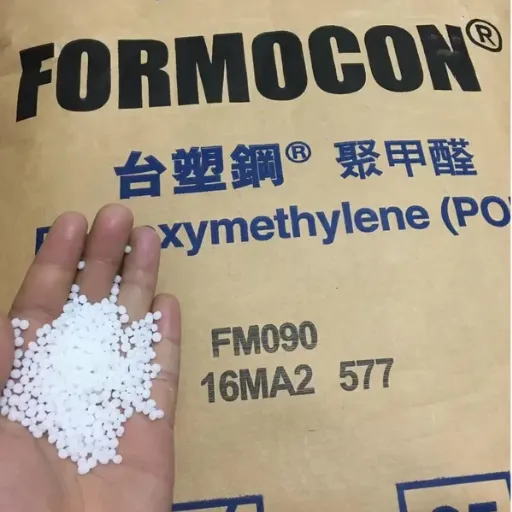
A POM material data sheet is a formal document published by the resin manufacturer or distributor. It describes the tested properties of a specific POM grade under controlled laboratory conditions. The data sheet is not a general description of POM.
It's specific to one grade, such as a DuPont Delrin homopolymer, a Polyplastics Duracon copolymer, or a glass-filled modified POM. You can browse the POM grades we supply and compare available brands and specifications.
The TDS, or acetal material data sheet, is one of the most important documents in the procurement and engineering workflow. It allows designers to compare grades, helps molders set processing parameters, and gives quality teams a baseline for incoming material inspection. In many industries, including automotive and electronics, customers require the TDS as part of supplier qualification and audit documentation.
Ailide Polymer provides a POM material selection guide and a technical data sheet for every quoted POM grade. For production orders, we also supply a certificate of analysis (COA) for the specific batch, so you can verify that the delivered material matches the data sheet values.
Why the POM Material Data Sheet Matters
Engineers and buyers often ask why they cannot simply order "POM" without reviewing the TDS. The reason is that POM is not one material. It is a family of grades with very different performance characteristics.
A homopolymer POM may have tensile strength above 70 MPa, while a copolymer POM may be closer to 60 MPa. A glass-filled grade can have double the stiffness of an unfilled grade. A UV-stabilized grade will behave differently outdoors than a standard natural grade. Without the POM material data sheet, you are guessing.
For manufacturers working under tight tolerances or regulatory requirements, the TDS is also a risk-management tool. It provides traceability, supports material approvals, and helps resolve disputes if a batch does not perform as expected. When you source POM through an authorized distributor like Ailide Polymer, the data sheet and COA together protect your supply chain from counterfeit or off-spec material. Learn more about our quality assurance program, batch traceability, and certificates of analysis.
What a POM Technical Data Sheet Includes
Most POM material data sheets follow a standard format. Whether you call it a POM material data sheet, a POM technical data sheet, or a TDS, the document should contain the sections below.
General Information
This section identifies the grade name, manufacturer, color, and material classification. It may also list relevant regulatory approvals, such as UL ratings, FDA compliance, or automotive specifications. Always confirm that the grade name on the data sheet matches the material you ordered.
Mechanical Properties
Mechanical POM properties describe how the material behaves under load. These values on the POM material data sheet help you decide whether a grade can carry the mechanical loads in your part. The most common values are:
Tensile strength: The maximum stress the material can withstand when pulled. Typical POM values range from 60 to 70 MPa.
Flexural modulus: A measure of stiffness. Higher values mean less bending under load. POM typically ranges from 2,400 to 2,800 MPa.
Impact strength: Resistance to sudden impact. Izod and Charpy tests are common.
Elongation at break: How much the material stretches before breaking. Higher values usually indicate more ductility.
Hardness: Often reported as Rockwell M or R scale.
These values help you decide whether a grade can carry the mechanical loads in your part. For gears, bearings, and structural components, tensile strength and flexural modulus are especially important. See our industrial plastics solutions for more application-specific material recommendations.
Thermal Properties
Thermal POM properties tell you how the material responds to temperature. Check these POM datasheet values carefully when your part will operate in a hot environment. Key values include:
Melting point: The temperature at which the crystalline structure breaks down. Homopolymer POM melts around 175 °C; copolymer POM melts around 165 °C.
Heat deflection temperature (HDT): The temperature at which the material deforms under a specified load. It indicates short-term heat resistance.
Vicat softening temperature: Another measure of heat resistance, often slightly higher than HDT.
Coefficient of linear thermal expansion (CLTE): How much the material expands or contracts with temperature change. This matters for tight-tolerance assemblies.
Thermal conductivity: How well the material transfers heat. POM has low thermal conductivity, which affects cooling time in molding.
If your part will operate in a hot environment or experience temperature cycles, thermal properties should be part of your grade selection criteria.
Electrical Properties
For electrical and electronic applications, the data sheet will list values such as:
Volume resistivity: How strongly the material resists electrical current.
Dielectric strength: The maximum electric field the material can withstand before breakdown.
Dielectric constant: How much the material stores electrical energy.
Comparative tracking index (CTI): Resistance to electrical tracking on the surface.
POM is a good electrical insulator in dry conditions, but properties can change with moisture absorption. For safety-critical electrical parts, review these POM material data sheet values carefully.
Chemical Resistance
The data sheet may include a chemical resistance table or general statements about resistance to fuels, oils, solvents, acids, and bases. POM copolymer generally has better chemical resistance than homopolymer, especially to hot water and alkalis. For fuel-contact applications, always verify compatibility with the specific fluid and temperature.
Processing Properties
This section is critical for molders. It typically includes:
Melt temperature range: The recommended temperature for the molten resin during injection molding.
Mold temperature range: The recommended temperature for the mold cavity walls.
Mold shrinkage: The expected shrinkage from mold cavity dimensions to final part dimensions. POM shrinkage is typically 1.5% to 2.5%.
Drying conditions: Temperature and time needed to remove moisture before processing.
Injection pressure and speed: General guidance for machine settings.
Processing properties are not fixed rules. They are starting points that should be adjusted based on part geometry, wall thickness, and molding equipment. For more detailed processing guidance, see Plastics Technology or speak with Ailide Polymer's technical support team.
How to Read POM Datasheet Values
Reading POM datasheet values is only the first step. Understanding what the numbers on the POM material data sheet mean for your application is what matters.
Check the Test Standards
Values on a data sheet are meaningless without knowing the test method. Common standards include ISO, ASTM, and DIN. For example, tensile strength tested under ISO 527 may differ from ASTM D638, even for the same material. When comparing two grades, make sure the test standards are the same or similar.
Understand Test Conditions
Properties change with temperature, humidity, and specimen conditioning. A data sheet may report tensile strength at 23 °C and 50% relative humidity. If your part operates at 80 °C or in a humid environment, the actual performance will be different. Some data sheets include values at elevated temperatures or after moisture conditioning.
Look at Typical vs Guaranteed Values
Some data sheets report typical values based on historical testing. Others report guaranteed minimum or maximum values. A typical value represents the average performance you can expect.
A guaranteed value is a commitment from the supplier. Know which one you are reading before making design decisions.
Compare Similar Grades Only
Don't compare a homopolymer POM data sheet directly with a copolymer POM and assume the higher number is always better. The grades are designed for different conditions. A copolymer may have lower tensile strength but better chemical resistance and thermal stability. Match the material to the application, not just the headline numbers.
POM Grade Selection Using Datasheet Values
The goal of POM grade selection is to make a confident material choice using the POM material data sheet. Here is a simple process.
Step 1: List Your Application Requirements
Start with the functional requirements of your part. Consider mechanical load, operating temperature, chemical exposure, electrical insulation, dimensional tolerance, and surface finish. Also consider processing method, production volume, and regulatory requirements.
Step 2: Map Requirements to Data Sheet Properties
Match each requirement to a specific property on the data sheet. For example:
High load at room temperature → tensile strength and flexural modulus
Outdoor exposure → UV resistance and weathering data
Fuel contact → chemical resistance to hydrocarbons
Tight tolerance → mold shrinkage and CLTE
Electrical safety → dielectric strength and CTI
Step 3: Compare Candidate Grades
Shortlist two or three POM grades that meet your key requirements. Compare their data sheets side by side. Pay attention to trade-offs.
A grade with higher stiffness may have lower impact resistance. A grade with better chemical resistance may cost more or be harder to process.
Step 4: Validate With Testing
A data sheet is a starting point, not a substitute for application testing. For critical parts, request samples and run prototype testing under real-use conditions. If you are still deciding between materials, our comparison of Nylon vs POM for wear parts can help you evaluate which plastic fits gears, bushings, and bearing applications. Ailide Polymer supports trial batches so you can validate performance before committing to production quantities.
Step 5: Confirm Documentation for Production
Once you select a grade, make sure the documentation supports your quality system. Request the TDS, COA, and any regulatory declarations before placing the production order. This step is especially important for automotive, medical, and export-oriented manufacturers.
Common Mistakes When Reading POM Polyoxymethylene Specifications
Even experienced engineers can misread a POM material data sheet. Here are the most common mistakes.
Assuming All POM Grades Are Similar
POM homopolymer and copolymer have different property profiles. Filled and unfilled grades behave differently. Always read the POM material data sheet for the exact grade you are considering.
Ignoring Shrinkage and Warpage Data
Mold shrinkage is not a single number. It varies with wall thickness, flow direction, mold temperature, and hold pressure. Parts with tight tolerances require careful shrinkage analysis and possibly mold flow simulation.
Overlooking Moisture Effects
POM absorbs less moisture than nylon, but it still must be dried before processing. Moisture can cause surface defects and hydrolysis during molding. Follow the drying recommendations on the data sheet.
Using Room-Temperature Data for Hot Applications
If your part operates above 60 °C, room-temperature tensile strength and modulus may not be relevant. Look for elevated-temperature data or plan to test the material under operating conditions.
POM Material Data Sheet Example: What to Expect
Below is a simplified example of how a POM material data sheet might present key properties. This is for illustration only; always refer to the actual TDS from your supplier.
| Property | Test Method | Typical Value | Unit |
|---|---|---|---|
| Tensile strength | ISO 527 | 66 | MPa |
| Flexural modulus | ISO 178 | 2,600 | MPa |
| Izod impact strength | ISO 180 | 6 | kJ/m² |
| Heat deflection temperature | ISO 75 | 100 | °C |
| Melting point | ISO 11357 | 165 | °C |
| Mold shrinkage | ISO 294-4 | 1.8 to 2.2 | % |
| Density | ISO 1183 | 1.41 | g/cm³ |
This table shows one possible copolymer grade. A homopolymer grade might show higher tensile strength and a higher melting point. A glass-filled grade would show much higher flexural modulus but lower impact strength.
Where to Get a Reliable POM Material Data Sheet
The most reliable source for a POM material data sheet is the authorized resin manufacturer or distributor. Manufacturer websites such as DuPont Delrin and Polyplastics publish TDS documents for their standard grades. However, navigating multiple supplier portals can be time-consuming, especially if you are comparing grades from different brands.
Ailide Polymer simplifies this process. As an authorized distributor, we provide POM material data sheets for all the grades in our portfolio, including DuPont, Polyplastics, Chi Mei, and Formosa Plastics grades. We can also help you compare properties, interpret test methods, and identify the right grade for your application. Contact our technical support team or request a quote to get started.
FAQ: POM Material Data Sheet
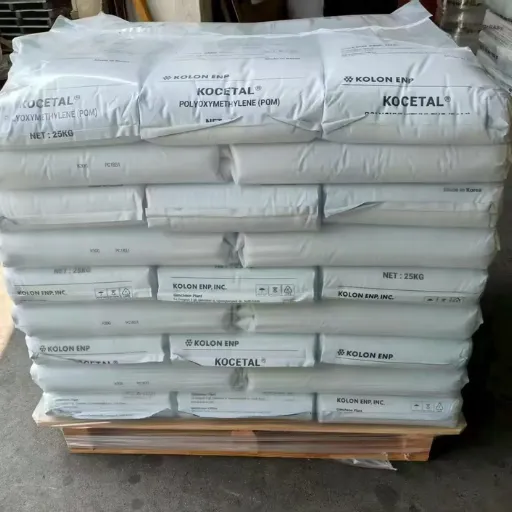
What is a POM material data sheet?
A POM material data sheet is a supplier document that lists the mechanical, thermal, electrical, processing, and sometimes regulatory properties of a specific POM grade. It's used for grade comparison, material approval, and quality verification.
Is a TDS the same as a material safety data sheet (SDS)?
No. A TDS describes material properties and performance. An SDS, also called an MSDS, describes safety hazards, handling, storage, and emergency procedures. Both are important but serve different purposes.
Can I use a POM material data sheet to predict part performance?
A TDS is a useful starting point, but it can't predict real-world part performance exactly. Part geometry, processing history, environmental conditions, and loading mode all affect final behavior. Use the TDS to narrow down grades, then validate with testing.
What should I do if my supplier cannot provide a TDS?
If a supplier cannot provide a TDS or COA, that is a red flag. It may indicate unauthorized sourcing, off-spec material, or counterfeit resin. Work with an authorized distributor who can supply full documentation for every batch.
How often do POM material data sheets change?
Data sheets are usually updated when a formulation changes, a new grade is introduced, or test standards are revised. Always use the latest version of the TDS for the specific grade and lot you are buying.
Conclusion
A POM material data sheet is one of the most useful tools for selecting and qualifying a POM grade. It gives you the mechanical, thermal, electrical, and processing data you need to compare options and make confident decisions. However, the data sheet is only valuable if you read it carefully, understand the test conditions, and validate the results in your application.
When sourcing POM, work with a distributor who provides complete documentation and technical support. Ailide Polymer supplies POM material data sheets and certificates of analysis for every POM batch, helping you maintain quality, traceability, and production continuity. Contact our team to request a POM technical data sheet, discuss POM grade selection for your application, or arrange a trial batch for validation.
Recently Posted
-
ABS in Automotive Interiors: From Dashboards to Door Panels
September 2, 2026A tier-two supplier once substituted a general-purpose ABS for an automotive-grade ABS on a door trim component to save 4% on resi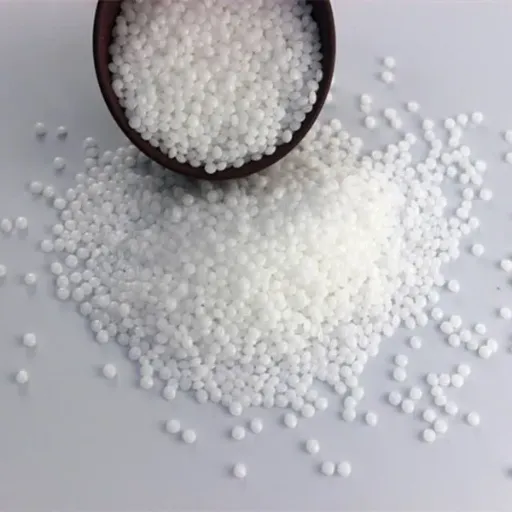 Read More
 -
ABS Flame Retardant Grades and UL 94 Ratings Explained: A Practical Guide for Buyers and Designers
September 2, 2026An electronics manufacturer once submitted a power-supply housing molded from standard ABS to a safety certification test. The mat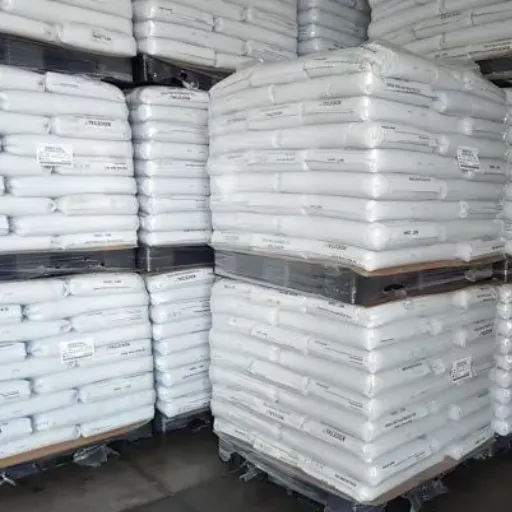 Read More
 -
KOCETAL K300 vs Formosa FM090 vs DURACON M90: Picking the Right Medium-Viscosity POM
September 2, 2026A gear shop in India once ordered a container of acetal copolymer based on a 5% price discount, without checking whether the grade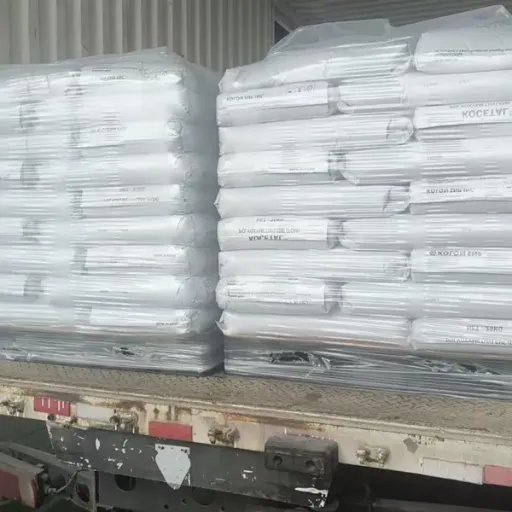 Read More
 -
PP vs PE: Which Polyolefin Resin Fits Your Application?
September 2, 2026A bottle manufacturer once chose HDPE for a hot-fill juice container and watched the bottles distort on the filling line. The mate Read More

Contact Us
Recommended Products
-
 Automotive Interior Clip and Door Lock POM K300 Injection Molding Material With Low FrictionNegotiableMOQ: 1 Kilogram
 -
KOCETAL POM K300 Virgin Pellets For Precision Gear Bearing Automotive Latch Water Valve PartsNegotiableMOQ: 1 Kilogram
-
Original Kolon POM K300 Engineering Plastic Wear Resistant Self Lubricating Acetal GranulesNegotiableMOQ: 1 Kilogram
-
Self-Lubricating POM K300 HDT 120°C Wear Resistant Resin With 0.2% Moisture AbsorptionNegotiableMOQ: 1 Kilogram
-
POM FM090AW PTFE Filled Wear Resistant Low Friction Acetal for Silent GearsNegotiableMOQ: 1 Kilogram
-
POM FM090 General Purpose Acetal Copolymer With Excellent MachinabilityNegotiableMOQ: 1 Kilogram
-
POM FM090 Standard Flow Acetal Copolymer Granules for Precision Injection MoldingNegotiableMOQ: 1 Kilogram
-
POM FM090 UV Stabilized Acetal Resin for Outdoor Automotive ComponentsNegotiableMOQ: 1 Kilogram
-
Technical Support Available POM K300 Acetal Copolymer for Precision Injection Molding ServiceNegotiableMOQ: 1 Kilogram
-
KOCETAL POM K300 Acetal Copolymer MFR 9 G/10min 1.41g/cm³ Tensile Strength 60MPaNegotiableMOQ: 1 Kilogram
-
Factory Price Polyacetal POM Resin FM090 for Engineering ApplicationsNegotiableMOQ: 1 Kilogram
-
High Strength Cheap POM FM090 UV Engineering Plastic for Automotive PartsNegotiableMOQ: 1 Kilogram
-
Virgin POM FM090 Granules Pellets Engineering Plastic Raw MaterialNegotiableMOQ: 1 Kilogram
-
POM K300 Plastic Granules 1.5% Shrinkage Rate 80 Shore D Hardness Stable Injection Molding PerformanceNegotiableMOQ: 1 Kilogram
-
Low Friction Coefficient High Dimensional Stability POM K300 Acetal Copolymer Injection Molding GradeNegotiableMOQ: 1 Kilogram

-
POM K300 Acetal Sheet Used for Automotive Gear Components and Conveyor Chains in Industrial MachineryNegotiableMOQ: 1 Kilogram
-
POM K300 Engineering Plastic Sheet With Melting Point 165°C and Excellent Wear Resistance for MachiningNegotiableMOQ: 1 Kilogram
-
POM K300 Acetal Copolymer Injection Molding Grade With Low Friction Coefficient and High Dimensional StabilityNegotiableMOQ: 1 Kilogram
-
POM K300 Polyoxymethylene Resin MFI 9 Engineering Plastic Granule for Injection MoldingNegotiableMOQ: 1 Kilogram
-
Virgin POM Granules Polyoxymethylene Pellets Manufacturer Direct Price for Injection MoldingNegotiableMOQ: 1 Kilogram