Business License

POM vs ABS: Stiffness, Wear Resistance, and Cost Compared
A gear manufacturer once molded a critical timing wheel from ABS to save money, only to find the teeth wearing flat after roughly 40,000 cycles. The replacement POM part passed 400,000 cycles and the tooling cost was identical. The difference was material selection, not machining.
We hear this story often, because POM and ABS look similar to a newcomer: both are off-white granules, both injection mold easily, and both are called engineering plastics by their suppliers. In practice they serve very different jobs, and picking the wrong one shows up as field failures, warranty claims, and lost customers.
This comparison gives you a clear decision framework: where each material wins, what the cost picture really looks like, and how to match the resin to your part before you commit to a mold.
1. What Each Material Brings: A Quick Profile
POM, short for polyoxymethylene and also called acetal, is a semi-crystalline engineering plastic known for stiffness, low friction, and dimensional stability. It holds tight tolerances in gears, bearings, pump parts, and other precision components.
ABS, or acrylonitrile butadiene styrene, is an amorphous terpolymer that balances impact strength, surface finish, and ease of processing. It dominates housings, enclosures, automotive interior trim, and consumer goods.
The crystalline structure of POM and the amorphous structure of ABS explain most of their differences. Crystals give POM rigidity and fatigue resistance; the rubber phase in ABS gives it toughness and a pleasant matte surface.
Both materials come in a wide range of grades. POM is available as homopolymer and copolymer, with the copolymer favored for thermal stability and chemical resistance. ABS spans from high-impact grades to high-heat and flame-retardant variants, so the family covers more ground than many buyers assume. Grade selection within each family can shift performance by 20 to 40 percent.
Ailide Polymer stocks representative grades of both families, which makes direct comparison testing straightforward.
2. Mechanical Stiffness: POM Holds Its Shape
Stiffness is where POM vs ABS first separates. POM has a tensile modulus of roughly 2,500 to 3,200 MPa, while ABS sits around 1,800 to 2,600 MPa depending on grade.
That gap matters for parts that must resist bending or creep under constant load. A POM snap-fit clip stays tight after months of use; an ABS clip relaxes and releases, sometimes at the worst moment.
For thin-wall designs, the stiffness difference is even more visible. A wall that flexes in ABS may be perfectly rigid in POM, which is why precision mechanism designers reach for acetal first.
Temperature behavior follows stiffness. POM holds useful mechanical strength up to roughly 90 to 100°C continuously, while ABS softens noticeably above 80°C under load. In an engine bay or near a motor, that difference decides whether a part sags or stays true. High-heat ABS grades exist, but they cost nearly as much as POM while still lacking its wear properties.
3. Friction and Wear: Where POM Pulls Ahead
Self-lubricating behavior is the signature advantage of POM. Its coefficient of friction against steel is typically 0.2 to 0.35, low enough to run dry in many mechanisms.
ABS is not a wear material. It has a higher coefficient of friction and no natural bearing capability, so sliding surfaces in ABS quickly generate heat, dust, and grooves.
The table below summarizes the wear-related properties you should compare before choosing.
| Property | POM (Acetal) | ABS |
|---|---|---|
| Coefficient of friction (vs steel) | 0.20–0.35 | 0.35–0.50 |
| Wear resistance | Excellent | Poor to fair |
| Fatigue endurance | Excellent | Moderate |
| Self-lubrication | Yes | No |
Surface hardness also favors POM, with a Rockwell hardness around R118 compared with ABS at roughly R105. Harder surfaces resist scratching and abrasion, which keeps sliding parts dimensionally stable over their service life.
Bearing applications illustrate the gap in practical terms. A POM bushing running against a steel shaft can operate for hundreds of thousands of cycles with minimal lubrication. The same bushing in ABS would heat up, smear, and fail in a fraction of that life. This is why acetal is the default bearing material in office equipment and appliances.
4. Impact Strength and Surface Finish: ABS's Territory
Flip the comparison and ABS takes the lead on toughness. Standard ABS delivers impact strength of roughly 15 to 30 kJ/m², while unmodified POM is stiffer but more sensitive to sharp notches.
Surface quality is another clear win for ABS. It accepts paint, plating, and textured finishes well, which is why dashboards and appliance shells are molded from it.
POM, by contrast, is difficult to bond and paint without special surface treatment. It looks plain in its natural color, and that is usually fine because POM parts are functional rather than decorative.
For parts that get dropped, knocked, or scratched, ABS is the forgiving choice; for parts that must slide and stay precise, POM wins.
The notched sensitivity of POM deserves respect in design. A sharp corner or a molded-in stress raiser can turn a tough-looking acetal part into a brittle one. Generous radii and proper gate placement eliminate most of this risk, which is a matter of mold design rather than material capability.
5. Dimensional Stability and Moisture Behavior
POM absorbs very little moisture, around 0.2% at saturation, so its dimensions stay stable across humidity changes. This is critical for parts that must fit and function over years.
ABS absorbs more water, roughly 0.2 to 0.4% by weight in a humid environment, and it swells slightly as a result. The change is small but can matter for press-fit and tolerance-critical assemblies.
Thermal expansion is similar for both materials, so the real stability difference comes from moisture and creep. In hot, humid climates, POM parts hold their geometry measurably better.
Chemical resistance separates the two even more clearly. POM resists fuels, oils, solvents, and weak acids well, which is why it appears in automotive fuel systems and pump components. ABS is attacked by many solvents and weakens in contact with oils and fuels over time. If your part touches hydrocarbons, the choice is essentially made for you.
6. Processing Differences: Injection Molding Notes
Both materials mold well, but the processing windows are different. POM is processed at roughly 190 to 220°C and benefits from consistent melt temperature, while ABS runs at 210 to 250°C.
POM releases formaldehyde gas when overheated, so molders must avoid long residence time and dead spots in the barrel. ABS is more forgiving, though it benefits from pre-drying at about 80°C for 2 to 4 hours.
Shrinkage also differs. POM shrinks around 1.8 to 2.2% and can warp with thick walls, while ABS shrinks less, typically 0.4 to 0.7%, which simplifies tooling for large flat parts.
Mold design follows the material's shrinkage behavior. POM tooling should be built with a shrinkage allowance near 2 percent and generous draft angles to avoid drag marks on long cores. ABS molds run cooler and tolerate tighter tolerances on large surfaces. Both materials fill well in multicavity tools when the runner system is balanced.
7. Cost Comparison: Upfront Price and Total Cost
On a per-kilogram basis, POM is noticeably more expensive than ABS. As of mid-2026, commodity ABS resin typically costs roughly 1.40 to 2.20 USD per kg, while standard acetal copolymer runs about 1.80 to 3.20 USD per kg.
Total part cost, however, is not just resin price. POM parts often weigh less for the same function because walls can be thinner, and they last far longer in wear applications, which cuts warranty and replacement costs.
The table below gives a practical cost comparison for a typical precision component.
| Cost Factor | POM (Acetal) | ABS |
|---|---|---|
| Resin price per kg | Higher | Lower |
| Cycle time | Similar | Similar |
| Tooling cost | Similar | Similar |
| Part longevity in wear use | Much longer | Short |
| Total cost of ownership | Lower in mechanisms | Lower in housings |
Volume also shifts the economics. For high-volume consumer housings, the ABS price advantage compounds quickly and usually decides the material. For low-volume precision mechanisms, resin cost is a small fraction of total cost, so POM's premium is irrelevant compared with its reliability advantage.
When both materials are on the table, a distributor that stocks them side by side, such as Ailide Polymer (Jiangsu) Co Ltd, can supply trial quantities of each for direct comparison. That is a practical way to settle the cost question with real numbers instead of estimates.
8. Real-World Cases: What the Choice Costs in Practice
Not long ago, a client producing vending machine coin mechanisms switched the currency gate from ABS to POM after the ABS gates wore out and jammed within months. The POM gates, molded from a standard acetal copolymer, survived years of constant coin contact with no measurable wear, and the redesign required no tooling change. The client estimated the switch saved roughly 60% in replacement parts and service calls over the first year.
A few years back, a consumer electronics brand had the opposite experience. A decorative speaker grille originally specified in POM looked dull and resisted painting, so the team moved it to ABS, cut the resin cost by about 30%, and got the matte black finish the designer wanted with no functional trade-off.
The pattern from these two cases is consistent. Functional, load-bearing parts belong to POM; cosmetic, impact-exposed parts belong to ABS. The companies that get this wrong pay in field failures, and the ones that get it right rarely think about the material again after launch.
9. Decision Guide: Which One for Your Part?
Use the application, not the habit, to decide. If your part slides, rotates, engages, or carries load under constant friction, choose POM. Gears, bushings, pump impellers, pulleys, and precision clips are all acetal territory.
If your part is an enclosure, a cosmetic shell, or a component that must survive impacts and look good, choose ABS. Housings, bezels, trim, and consumer electronics parts are ABS territory.
When you are uncertain, ask two questions. Does the part bear load or friction continuously? Does it need to survive impacts or take paint well? Answering those two questions resolves most POM vs ABS debates.
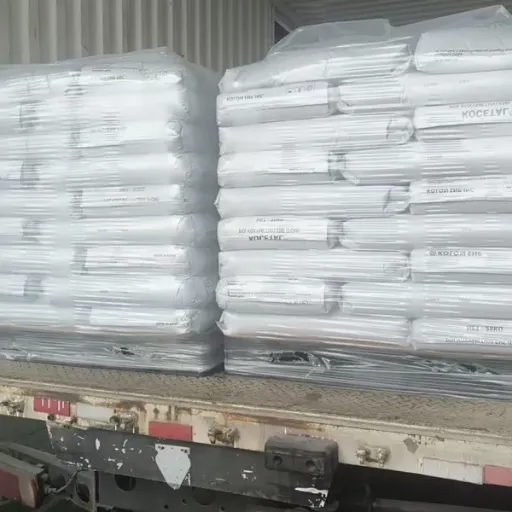
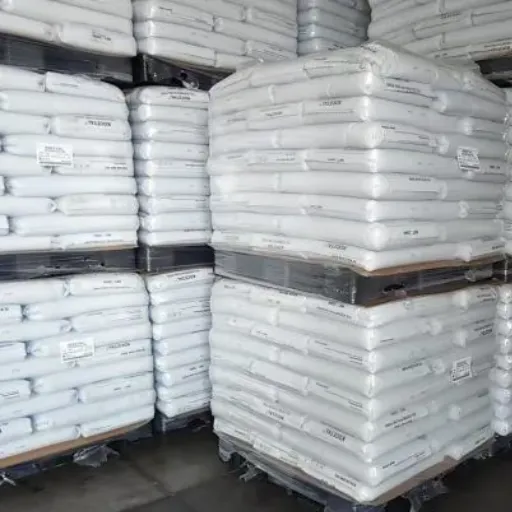
At Ailide Polymer (Jiangsu), we keep both KOCETAL POM K300 and ABS grades in stock for this reason. Buyers often need both materials across their product line, and having a single supplier simplifies logistics and documentation.
Before ordering, confirm the exact grade with your molder and request a material data sheet. The difference between a standard POM copolymer and a toughened grade is large enough to change test results. A small trial batch costs little and answers most questions faster than datasheet reading.
10. FAQ About POM vs ABS
10.1 Is POM stronger than ABS?
In stiffness and creep resistance, yes, POM is noticeably stronger. It holds its shape under continuous load and resists wear far better than ABS. In impact strength, ABS is tougher and more forgiving of sharp drops.
The right answer depends on whether your part faces steady load or sudden impacts; many designs actually use POM for the mechanism and ABS for the housing around it. A good starting point is to compare the tensile modulus and Izod impact values on the two datasheets before any prototype work.
10.2 Can ABS be used for gears?
Only for very light, low-cycle applications. ABS lacks the wear resistance, low friction, and fatigue endurance that gears need, so teeth wear out quickly under continuous operation. POM is the standard choice for injection-molded gears because of its self-lubricating surface and dimensional stability.
If cost pressure is extreme, some designers test ABS prototypes first, but production gears are almost always acetal. The technical team at Ailide can help you evaluate both options with grade-level data before you cut steel.
10.3 Why is POM more expensive than ABS?
POM is a more complex polymer to produce, requiring careful polymerization and stabilization chemistry, and it is produced in smaller volume than ABS. The resin price reflects that. However, POM parts often cost less per delivered function because thinner walls and longer wear life reduce material use and replacement frequency. Buyers who compare only the per-kg price miss this total-cost picture.
10.4 Can POM and ABS be welded or glued together?
Joining the two is difficult because they are chemically different. ABS can be solvent-bonded and ultrasonic welded to itself; POM is notoriously hard to bond with adhesives and requires special surface treatment. If a design needs both materials in one assembly, mechanical fastening or over-molding is usually the practical route rather than gluing them directly together.
Recently Posted
-
PP in Food Packaging: Containers, Films, and Closures
September 1, 2026A frozen-food brand once switched its microwaveable tray from a multilayer material to a cheaper single-layer film to save packagi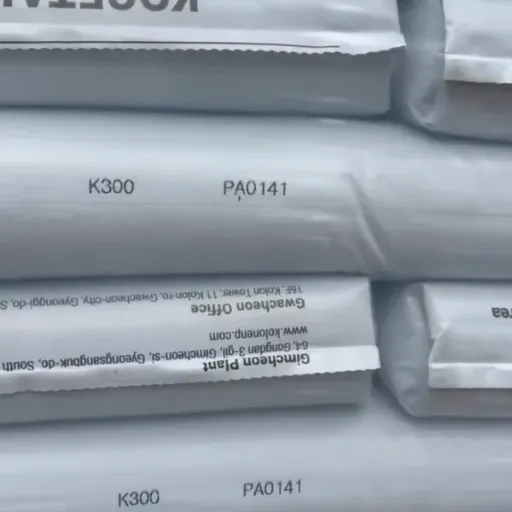 Read More
 -
POM Shrinkage and Mold Design: Holding Tolerances on Precision Parts
August 31, 2026A medical device maker once machined a mold for an acetal valve body using a generic 2.0% shrinkage allowance. The first trial par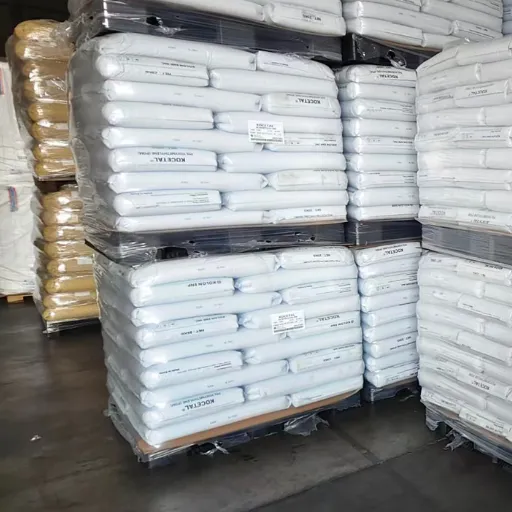 Read More
 -
How to Choose a PP Resin Supplier in China: 8 Practical Checks
August 28, 2026A buyer once ordered 20 tons of polypropylene resin from a trader who offered a price 8% below the market average. The shipment ar Read More
 -
Polypropylene (PP) Plastic 101: What It Is, How It's Made, and Why It Matters
August 26, 2026A packaging factory in Southeast Asia once switched its thin-wall yogurt cup line to a cheaper recycled blend without checking the Read More

Contact Us
Recommended Products
-
 Automotive Interior Clip and Door Lock POM K300 Injection Molding Material With Low FrictionNegotiableMOQ: 1 Kilogram
 -
KOCETAL POM K300 Virgin Pellets For Precision Gear Bearing Automotive Latch Water Valve PartsNegotiableMOQ: 1 Kilogram
-
Original Kolon POM K300 Engineering Plastic Wear Resistant Self Lubricating Acetal GranulesNegotiableMOQ: 1 Kilogram
-
Self-Lubricating POM K300 HDT 120°C Wear Resistant Resin With 0.2% Moisture AbsorptionNegotiableMOQ: 1 Kilogram
-
POM FM090AW PTFE Filled Wear Resistant Low Friction Acetal for Silent GearsNegotiableMOQ: 1 Kilogram
-
POM FM090 General Purpose Acetal Copolymer With Excellent MachinabilityNegotiableMOQ: 1 Kilogram
-
POM FM090 Standard Flow Acetal Copolymer Granules for Precision Injection MoldingNegotiableMOQ: 1 Kilogram
-
POM FM090 UV Stabilized Acetal Resin for Outdoor Automotive ComponentsNegotiableMOQ: 1 Kilogram
-
Technical Support Available POM K300 Acetal Copolymer for Precision Injection Molding ServiceNegotiableMOQ: 1 Kilogram
-
KOCETAL POM K300 Acetal Copolymer MFR 9 G/10min 1.41g/cm³ Tensile Strength 60MPaNegotiableMOQ: 1 Kilogram
-
Factory Price Polyacetal POM Resin FM090 for Engineering ApplicationsNegotiableMOQ: 1 Kilogram
-
High Strength Cheap POM FM090 UV Engineering Plastic for Automotive PartsNegotiableMOQ: 1 Kilogram
-
Virgin POM FM090 Granules Pellets Engineering Plastic Raw MaterialNegotiableMOQ: 1 Kilogram
-
POM K300 Plastic Granules 1.5% Shrinkage Rate 80 Shore D Hardness Stable Injection Molding PerformanceNegotiableMOQ: 1 Kilogram
-
Low Friction Coefficient High Dimensional Stability POM K300 Acetal Copolymer Injection Molding GradeNegotiableMOQ: 1 Kilogram

-
POM K300 Acetal Sheet Used for Automotive Gear Components and Conveyor Chains in Industrial MachineryNegotiableMOQ: 1 Kilogram
-
POM K300 Engineering Plastic Sheet With Melting Point 165°C and Excellent Wear Resistance for MachiningNegotiableMOQ: 1 Kilogram
-
POM K300 Acetal Copolymer Injection Molding Grade With Low Friction Coefficient and High Dimensional StabilityNegotiableMOQ: 1 Kilogram
-
POM K300 Polyoxymethylene Resin MFI 9 Engineering Plastic Granule for Injection MoldingNegotiableMOQ: 1 Kilogram
-
Virgin POM Granules Polyoxymethylene Pellets Manufacturer Direct Price for Injection MoldingNegotiableMOQ: 1 Kilogram