Business License

ABS Plastic Advantages and Disadvantages: A Practical 2026 Guide
ABS plastic advantages and disadvantages come down to a simple trade-off: it delivers excellent impact strength, easy processing, and an attractive surface finish at a moderate cost, but it falls short in high-heat, high-UV, and chemically aggressive environments. For appliance housings, automotive interior trim, toys, and consumer electronics, ABS is often the default choice. For under-hood automotive parts, outdoor enclosures, or continuous load-bearing applications, other materials may be a better fit.
What makes ABS both popular and frustrating is that "ABS" covers a wide family. The acrylonitrile butadiene styrene you buy for a luggage shell is not the same grade specified for a medical device housing or an automotive dashboard. Two suppliers can quote the same acronym and deliver materials with very different heat resistance, surface gloss, and impact performance. This guide breaks down the real advantages and disadvantages, when each matters, and how to choose the right ABS grade or alternative without over-engineering your part.
Key Takeaways
ABS combines high impact strength, good rigidity, and easy injection molding at a cost below most engineering plastics, making it ideal for housings, trim, and consumer goods.
Heat resistance is limited: most ABS grades soften below 100 °C, so they are not suitable for engine-bay, sterilization, or hot-fill applications without reinforcement or substitution.
UV exposure degrades ABS over time, causing yellowing and embrittlement; outdoor parts need UV-stabilized grades, protective coatings, or an alternative material.
Acrylonitrile butadiene styrene blends easily with PC, PA, and other polymers, which expands its property range but adds selection complexity.
ABS is not chemically resistant to strong solvents, ketones, esters, or chlorinated hydrocarbons, so contact with cleaners or adhesives must be checked.
The cheapest ABS offers are not always the best value: off-spec, recycled, or poorly stabilized grades can cause sink marks, warp, and field failures.
What Is ABS Plastic?
Acrylonitrile butadiene styrene (ABS) is a thermoplastic polymer made by blending three monomers. Acrylonitrile contributes heat and chemical resistance plus tensile strength. Butadiene provides toughness and impact resistance at low temperatures. Styrene gives rigidity, processability, and a glossy surface finish. The balance of these three components determines whether an ABS grade is stiff, flexible, glossy, or matte.
ABS is produced by emulsion polymerization, bulk polymerization, or continuous mass polymerization. Mass-polymerized grades tend to have lower residual volatiles and better color consistency, while emulsion grades offer broader property ranges and lower cost. The base polymer is often compounded with additives for heat stabilization, UV resistance, flame retardancy, color, or lubrication.
Common grades include:
General-purpose ABS: High gloss, good impact, used for appliance housings, toys, and office equipment.
High-impact ABS: Higher butadiene content for extra toughness; used for luggage, power-tool housings, and automotive interior parts.
Heat-resistant ABS: Modified styrene-acrylonitrile ratio or added alpha-methyl styrene; used for hair dryers, coffee makers, and automotive trim.
Flame-retardant ABS: Halogenated or non-halogenated FR systems for electronics and electrical enclosures.
PC/ABS blends: Polycarbonate-acrylonitrile butadiene styrene alloys for higher heat and impact; used in automotive dashboards, laptop housings, and medical equipment.
ABS/PMMA alloys: For improved scratch resistance and surface hardness in display bezels and decorative trim.
For a deeper look at how ABS compares to its most common alloy partner, see our ABS vs PC/ABS guide. If you need a quick summary of material properties, MatWeb lists representative data for dozens of ABS grades.
The Main Advantages of ABS Plastic
Excellent Impact Strength and Toughness
One of the biggest ABS plastic advantages is impact resistance. Even at room temperature, ABS absorbs energy without shattering. At low temperatures, its butadiene rubber phase keeps it tougher than many general-purpose plastics. This is why ABS is used for luggage shells, helmet components, toy bricks, and automotive interior trim that must survive daily knocks and drops.
For designers, this toughness means thinner walls and lighter parts than more brittle plastics can allow. A well-designed ABS housing can save material and cost without sacrificing durability.
Good Rigidity and Dimensional Stability
ABS offers a useful balance of stiffness and ductility. Its tensile modulus typically falls between 1,800 and 2,500 MPa, which is enough for structural housings, bezels, and brackets that do not carry heavy loads. Dimensional stability is good for an amorphous thermoplastic, so parts hold their shape after molding and during normal use.
This rigidity makes ABS predictable for snap fits, living hinges, and assemblies where parts must locate accurately against each other.
Easy to Process and Decorate
ABS flows well in injection molding, extrusion, and thermoforming. Molding temperatures are moderate, cycle times are short, and the material releases from tools without extreme draft angles. That translates into lower tooling costs and faster production ramp-up than many engineering plastics require.
Surface finishing is another strength. ABS takes paint, plating, metallization, and silk-screening well. The chrome-plated ABS you see on automotive grilles and bathroom faucets is possible because the material accepts an electroless copper-nickel-chrome layer. Without that plating compatibility, many decorative automotive parts would be much more expensive.
Attractive Appearance and Color Options
ABS naturally produces a glossy surface with good color saturation. It can be pigmented in almost any color, from translucent tints to solid opaque shades. This makes it popular for consumer electronics, appliances, and toys where appearance is part of the value proposition.
Custom colors can be produced by the resin producer or by masterbatch at the molding machine, giving designers flexibility in cost and lead time.
Moderate Cost and Wide Availability
Standard ABS is one of the most cost-effective engineering plastics. It sits between commodity resins like polypropylene and higher-performance materials like polycarbonate or PBT. Because global capacity is large, supply is generally stable, and pricing is predictable enough for mass-production planning.
For buyers in China, domestic ABS grades from suppliers such as Chi Mei, Formosa, and LG Chem offer competitive pricing, while specialty grades from Sabic, Ineos, and Trinseo are available for more demanding specifications. Browse our ABS resin grades to see current options and request technical data sheets.
Good Electrical Insulation Properties
ABS is a good electrical insulator with stable dielectric properties over a broad frequency range. This makes it suitable for housings, enclosures, and internal components in consumer electronics, power tools, and small appliances. Flame-retardant grades extend this into areas where electrical safety standards apply.
When engineer Li Wei at a Shenzhen electronics contract manufacturer switched a router housing from a brittle generic plastic to ABS, the drop-test failure rate fell by more than half. The part cost only 8% more, and the better surface finish eliminated a secondary painting step. That is the kind of practical advantage ABS offers when the application fits the material.
Want to evaluate ABS for your next housing or trim part? Request an ABS quotation with your target grade, volume, and finish requirements, and we will send a technical data sheet and current pricing.
The Main Disadvantages of ABS Plastic
Limited Heat Resistance
The biggest limitation of standard ABS is heat resistance. Most grades have a Vicat softening temperature between 85 °C and 105 °C and a heat deflection temperature under load around 80 °C to 100 °C. That means ABS parts soften, warp, or lose strength in hot environments.
This is why ABS is not used for engine-bay components, dishwasher parts exposed to hot water cycles, or applications that require autoclave sterilization. Heat-resistant ABS grades extend this range to roughly 105 °C to 115 °C, but they cost more and still fall short of polycarbonate, PBT, or nylon for truly high-temperature service.
Poor UV and Weathering Resistance
Outdoor exposure is a problem for standard ABS. UV radiation breaks down the butadiene rubber phase, causing the surface to yellow, chalk, and become brittle. Cracks can appear within months of outdoor exposure in strong sunlight, depending on climate and part thickness.
UV-stabilized ABS grades exist, but they cost more and still do not match the long-term outdoor durability of ASA, polycarbonate, or polypropylene. For long-life outdoor products, many designers choose ASA, which is chemically similar to ABS but with an acrylic rubber phase that resists UV degradation.
Susceptibility to Solvents and Chemicals
ABS is attacked by strong polar solvents, ketones, esters, and chlorinated hydrocarbons. Cleaners, adhesives, and paints that contain acetone, MEK, or chlorinated solvents can stress-crack or dissolve the surface. This is a genuine concern for parts that will be cleaned with aggressive household or industrial chemicals.
Chemical resistance is adequate for water, aqueous detergents, weak acids, and many alcohols, but it should always be verified with the specific fluid and stress level in the end-use test. A part that passes a bench test may fail in the field because molded-in stress accelerates cracking.
Notched Sensitivity and Stress Cracking
Although ABS is tough in unnotched impact tests, it can be sensitive to sharp internal corners, thread roots, and molded-in stress concentrators. Under load or chemical exposure, these stress risers can initiate cracks. Good design, generous radii, and proper annealing can reduce this risk, but it remains a design consideration.
Moisture Absorption and Drying Requirements
ABS is hygroscopic relative to materials like polypropylene. Resin that has absorbed moisture will produce splay, silver streaks, and weak weld lines during injection molding. Most grades should be dried to below 0.1% moisture before processing, which adds a drying step and energy cost.
Failure to dry ABS properly is one of the most common causes of cosmetic defects in molded housings. Reputable molders factor drying into their process; bargain processors may skip it and blame the material.
Combustion and Smoke Characteristics
Standard ABS burns when exposed to flame and produces dense smoke. It is not suitable for applications requiring high flame resistance without an FR additive. Flame-retardant grades are available, but they can reduce impact strength and alter surface finish. Regulatory requirements such as UL 94 ratings must be specified clearly when ordering.
A mold maker in Ningbo we will call Mr. Zhang learned this the hard way. He chose the lowest-priced ABS for a consumer appliance housing to win a tender. Within six months, field returns began: parts were warping near the heating element, and a chemical wipe-down during service was causing stress cracks around mounting bosses. The resin savings were roughly USD 0.15 per part. The warranty and rework costs were more than ten times that. He now specifies heat-resistant, UV-stabilized ABS for similar products and validates chemical resistance before launch.
Stories like this are why the lowest price should never be the only selection criterion. Our quality assurance and batch traceability process helps you avoid the hidden costs of off-spec material.
ABS vs. Alternative Materials: When to Choose Something Else
ABS vs. Polycarbonate (PC)
PC offers higher heat resistance, better impact strength, and optical clarity, but it costs more and is harder to process. Choose PC or PC/ABS when impact and heat are critical. Choose ABS when cost, surface finish, and easy molding matter more.
ABS vs. Polypropylene (PP)
PP is lighter, cheaper, and more chemically resistant than ABS, but it is softer, has lower surface gloss, and is more difficult to paint or plate. PP suits storage containers, automotive interiors, and flexible living-hinge parts. ABS suits rigid housings and decorative parts.
ABS vs. POM (Acetal)
POM is far more rigid, wear-resistant, and dimensionally stable under load, but it is also more expensive and harder to mold with tight cosmetic requirements. POM is the better choice for gears, bearings, and precision mechanical parts. ABS is the better choice for cosmetic housings and light structural parts. Our POM material selection guide explains where each material fits.
ABS vs. PC/ABS Blends
PC/ABS blends bridge the gap between the two materials. They offer higher heat resistance and impact than ABS, with better processability and cost than pure PC. They are common in automotive interiors, laptop housings, and medical equipment where a single material must satisfy multiple requirements.
| Property | ABS | PC/ABS | Polycarbonate | Polypropylene |
|---|---|---|---|---|
| Impact strength | Good | Excellent | Excellent | Moderate |
| Heat resistance | Moderate | Good | Excellent | Moderate |
| Cost | Low | Moderate | High | Low |
| Surface finish | Excellent | Good | Good | Fair |
| Chemical resistance | Moderate | Moderate | Moderate | Good |
| UV resistance | Poor | Poor | Fair | Good |
| Ease of molding | Excellent | Good | Fair | Excellent |
How to Choose the Right ABS Grade for Your Application
Selecting ABS is not just about picking the cheapest option. Use this checklist to match the grade to the job:
Service temperature: Will the part see temperatures above 80 °C? If yes, consider heat-resistant ABS or a PC/ABS alloy.
UV exposure: Will the part be outdoors or near a window? Standard ABS will degrade; use UV-stabilized ABS, ASA, or another outdoor grade.
Chemical contact: Will it be cleaned with solvents, exposed to oils, or in contact with adhesives? Verify compatibility with the actual fluids.
Impact requirements: Will the part be dropped, assembled with snap fits, or loaded in flexure? High-impact ABS may be worth the premium.
Flame requirements: Does the application need UL 94 V-0 or other flame ratings? Specify FR ABS clearly.
Surface finish: Does the part need painting, plating, or a high-gloss finish? General-purpose or plating-grade ABS will be more suitable than heavily filled grades.
Regulatory compliance: Does the part need food contact, medical, or automotive approvals? Not all ABS grades carry the same certifications.
Volume and cost: Higher volumes can justify custom color matching or dedicated compounding. Lower volumes may be better served by standard colors and masterbatch.
A knowledgeable distributor will ask these questions before quoting. If a supplier sends a price for "ABS" without asking about temperature, environment, or finish, the price may not match the material you actually need.
Cost and Availability Considerations
ABS pricing typically ranges from USD 1.40 to 2.50 per kg for standard injection grades, depending on brand, grade, color, and order volume. Heat-resistant, flame-retardant, and specialty grades can run from USD 2.00 to 4.00 or more per kg. Domestic brands in China are usually at the lower end of the range, while specialty grades from global producers command a premium.
Order volume matters. A 25 kg trial order costs more per kilogram than a full truckload. Color matching, custom additives, and special packaging also add cost. Always confirm the Incoterm, payment terms, and documentation level when comparing quotes. For current pricing and availability, contact our team with your project details.
How to Avoid Common ABS Selection Mistakes
The most expensive mistake is not the wrong price; it is the wrong material. Common errors include:
Specifying standard ABS for an outdoor part, then blaming the material when it yellows and cracks.
Choosing a high-gloss grade for a structural load-bearing part without checking creep and deflection.
Buying "ABS" from an unverified source and receiving off-spec or regrind resin that causes molding defects.
Ignoring drying requirements, then rejecting good resin because splay appeared on the surface.
Assuming all ABS grades meet the same UL or food-contact standards.
The best way to avoid these mistakes is to work with an authorized distributor who provides technical data sheets, certificates of analysis, and batch traceability. For a broader guide on verifying suppliers and avoiding counterfeit resin, read our article on sourcing authentic engineering plastics in China.
Frequently Asked Questions About ABS Plastic Advantages and Disadvantages
What are the main advantages of ABS plastic?
The main advantages of ABS plastic are high impact strength, good rigidity, excellent surface finish, easy injection molding, wide colorability, and moderate cost. It also accepts paint, plating, and printing well, making it popular for housings, trim, and consumer products.
What are the disadvantages of ABS plastic?
The main disadvantages of ABS plastic are limited heat resistance, poor UV and weathering resistance, sensitivity to strong solvents and chemicals, and a tendency to stress crack under load in aggressive environments. Standard ABS also produces smoke when burned and usually requires drying before molding.
Is ABS better than polycarbonate?
It depends on the application. ABS is cheaper, easier to mold, and has a better surface finish. Polycarbonate is stronger, more heat-resistant, and can be transparent. For demanding impact and heat requirements, PC or PC/ABS is better. For cost-sensitive housings and decorative parts, ABS is usually the better choice.
Can ABS be used outdoors?
Standard ABS is not recommended for long-term outdoor use because UV radiation degrades it. UV-stabilized ABS or ASA performs better outdoors. For parts that must last years in sunlight, consider ASA, polycarbonate, or polypropylene with proper stabilization.
What is the difference between ABS and PC/ABS?
PC/ABS is a blend of polycarbonate and ABS. It combines the processability and surface quality of ABS with the higher impact strength and heat resistance of polycarbonate. PC/ABS is used in automotive interiors, electronics, and medical equipment where standard ABS is not enough.
Does ABS plastic absorb water?
ABS absorbs more moisture than polypropylene or polyethylene but less than nylon. It must be dried before injection molding to avoid cosmetic and structural defects. Proper storage and handling are important for consistent processing.
Is ABS plastic food safe?
Some ABS grades are approved for food contact, but not all. Food-contact approval depends on additives, pigments, and the specific grade. Always check the regulatory compliance of the exact grade before using it for food-contact applications.
Conclusion: Match the Grade to the Application
ABS plastic advantages and disadvantages are well-defined. It is tough, moldable, good-looking, and affordable, which makes it one of the most widely used engineering plastics for housings, trim, and consumer goods. Its limitations are equally clear: heat resistance, UV stability, and chemical resistance are not strong points.
Keep these points in mind when specifying ABS:
Standard ABS is excellent for indoor, moderate-temperature, impact-resistant parts where appearance and cost matter.
Heat-resistant, UV-stabilized, and flame-retardant grades extend the range but add cost and trade-offs.
PC/ABS blends are the natural next step when ABS alone is not tough or heat-resistant enough.
Always verify chemical compatibility and regulatory compliance for the specific grade and end-use environment.
Buy through authorized channels with batch documentation to avoid the hidden costs of off-spec or counterfeit material.
Your next step is to define your part's temperature, environment, finish, and volume requirements, then request a current quotation and technical data sheet for a grade that matches. Request an ABS quote from Ailide Polymer and we will recommend the right ABS, PC/ABS, or alternative material for your application with transparent pricing and honest guidance.
Recently Posted
-
PP in Food Packaging: Containers, Films, and Closures
September 1, 2026A frozen-food brand once switched its microwaveable tray from a multilayer material to a cheaper single-layer film to save packagi Read More
 -
POM Shrinkage and Mold Design: Holding Tolerances on Precision Parts
August 31, 2026A medical device maker once machined a mold for an acetal valve body using a generic 2.0% shrinkage allowance. The first trial par Read More
 -
How to Choose a PP Resin Supplier in China: 8 Practical Checks
August 28, 2026A buyer once ordered 20 tons of polypropylene resin from a trader who offered a price 8% below the market average. The shipment ar Read More
 -
POM vs ABS: Stiffness, Wear Resistance, and Cost Compared
August 27, 2026A gear manufacturer once molded a critical timing wheel from ABS to save money, only to find the teeth wearing flat after roughly Read More

Contact Us
Recommended Products
-
 Automotive Interior Clip and Door Lock POM K300 Injection Molding Material With Low FrictionNegotiableMOQ: 1 Kilogram
 -
KOCETAL POM K300 Virgin Pellets For Precision Gear Bearing Automotive Latch Water Valve PartsNegotiableMOQ: 1 Kilogram
-
Original Kolon POM K300 Engineering Plastic Wear Resistant Self Lubricating Acetal GranulesNegotiableMOQ: 1 Kilogram
-
Self-Lubricating POM K300 HDT 120°C Wear Resistant Resin With 0.2% Moisture AbsorptionNegotiableMOQ: 1 Kilogram
-
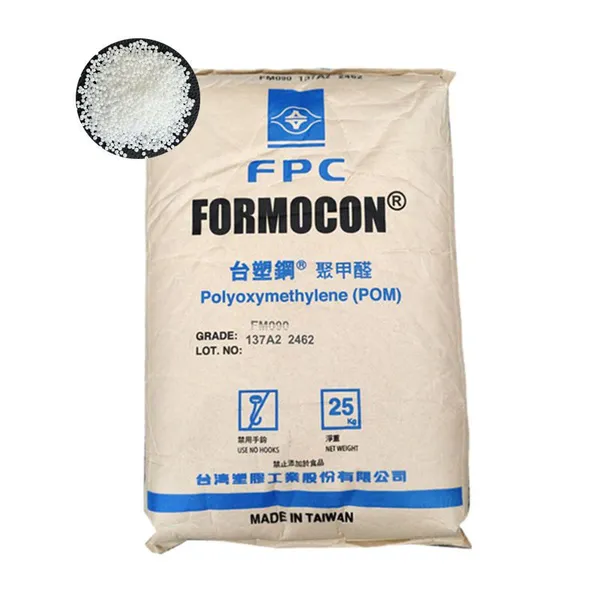
POM FM090AW PTFE Filled Wear Resistant Low Friction Acetal for Silent GearsNegotiableMOQ: 1 Kilogram
-
POM FM090 General Purpose Acetal Copolymer With Excellent MachinabilityNegotiableMOQ: 1 Kilogram
-
POM FM090 Standard Flow Acetal Copolymer Granules for Precision Injection MoldingNegotiableMOQ: 1 Kilogram
-
POM FM090 UV Stabilized Acetal Resin for Outdoor Automotive ComponentsNegotiableMOQ: 1 Kilogram
-
Technical Support Available POM K300 Acetal Copolymer for Precision Injection Molding ServiceNegotiableMOQ: 1 Kilogram
-
KOCETAL POM K300 Acetal Copolymer MFR 9 G/10min 1.41g/cm³ Tensile Strength 60MPaNegotiableMOQ: 1 Kilogram
-
Factory Price Polyacetal POM Resin FM090 for Engineering ApplicationsNegotiableMOQ: 1 Kilogram
-
High Strength Cheap POM FM090 UV Engineering Plastic for Automotive PartsNegotiableMOQ: 1 Kilogram
-
Virgin POM FM090 Granules Pellets Engineering Plastic Raw MaterialNegotiableMOQ: 1 Kilogram
-
POM K300 Plastic Granules 1.5% Shrinkage Rate 80 Shore D Hardness Stable Injection Molding PerformanceNegotiableMOQ: 1 Kilogram
-
Low Friction Coefficient High Dimensional Stability POM K300 Acetal Copolymer Injection Molding GradeNegotiableMOQ: 1 Kilogram

-
POM K300 Acetal Sheet Used for Automotive Gear Components and Conveyor Chains in Industrial MachineryNegotiableMOQ: 1 Kilogram
-
POM K300 Engineering Plastic Sheet With Melting Point 165°C and Excellent Wear Resistance for MachiningNegotiableMOQ: 1 Kilogram
-
POM K300 Acetal Copolymer Injection Molding Grade With Low Friction Coefficient and High Dimensional StabilityNegotiableMOQ: 1 Kilogram
-
POM K300 Polyoxymethylene Resin MFI 9 Engineering Plastic Granule for Injection MoldingNegotiableMOQ: 1 Kilogram
-
Virgin POM Granules Polyoxymethylene Pellets Manufacturer Direct Price for Injection MoldingNegotiableMOQ: 1 Kilogram